During extreme summer heat, many homeowners look for fast and inexpensive ways to cool their homes. One question comes up again and again: Does Spraying Your Roof With Water Cool Your House? At first glance, the idea seems logical—water cools surfaces, so it should lower indoor temperatures too. In this guide, we’ll explain what really happens when you spray water on a roof, how effective it is, the risks involved, and smarter long-term solutions.
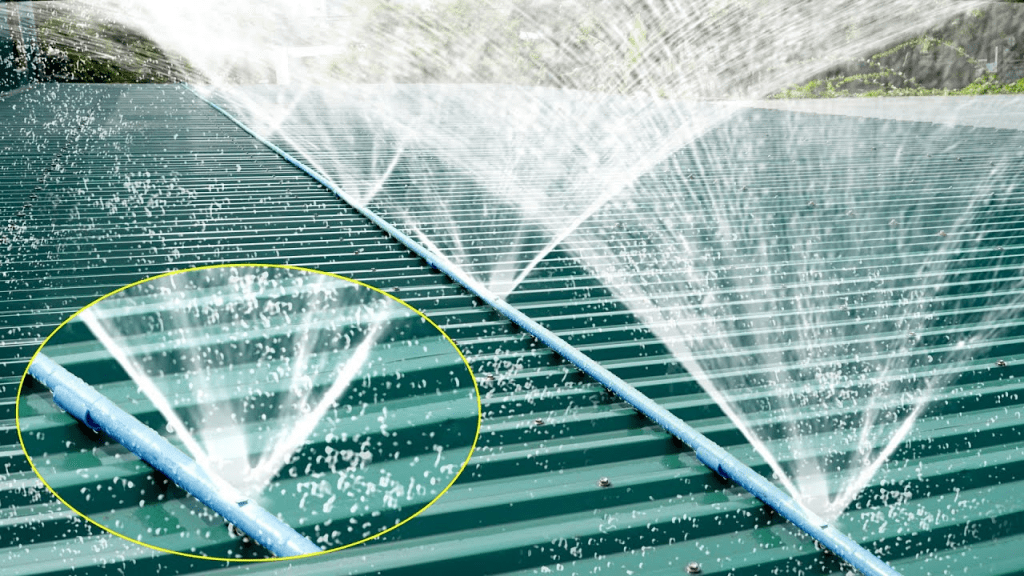
Does Spraying Your Roof With Water Cool Your House?
Let’s start with the direct answer.
Yes—but only slightly and only temporarily.
Spraying water on your roof can reduce roof surface temperature for a short period of time. However, the cooling effect inside the house is usually minimal, short-lived, and inefficient compared to other methods.
Read too: How Long Do Standing Seam Metal Roofs Last? A Comprehensive Guide to Durability and Longevity
In most real-world situations, homeowners see little to no noticeable indoor temperature drop, especially once the water evaporates.
How Roof Cooling With Water Works (Simple Science)
A common People Also Ask question is: Why would spraying water cool anything at all?
The principle: evaporative cooling
- Water absorbs heat from the roof surface
- As water evaporates, it carries heat away
- Roof surface temperature briefly drops
This is the same basic principle used in evaporative coolers. However, roofs present challenges that limit effectiveness.
Roof Surface Temperature vs Indoor Temperature
This is where many misconceptions begin.
Key difference
- Roof surface temperature can drop quickly
- Indoor temperature changes slowly
Even if spraying water lowers the roof surface temperature by 20–40°F, that does not mean your living space cools by the same amount. Heat transfer into the house depends on:
- Insulation quality
- Attic ventilation
- Roof material
- Outdoor air temperature
In well-insulated homes, the difference indoors may be less than 1–2°F.
How Long Does the Cooling Effect Last?
Another common question: How long does roof spraying actually work?
Typical duration
- Cooling begins immediately
- Effect lasts only while the roof is wet
- Once water evaporates, the roof reheats quickly
On a hot, sunny day, evaporation can happen in minutes, meaning you’d have to spray continuously to maintain any effect.
Does Roof Material Affect Results?
Yes—roof material makes a difference.
Asphalt shingles
- Absorb heat strongly
- Cool briefly when wet
- Reheat quickly
Metal roofs
- Heat and cool rapidly
- Water evaporates very fast
- Minimal indoor impact
Tile or concrete roofs
- Higher thermal mass
- Slightly longer cooling effect
- Still limited indoor benefit
No roofing material provides long-lasting cooling from water alone.
Realistic Indoor Cooling Expectations
Many homeowners hope this trick will reduce AC usage.
What usually happens
- Attic temperature may drop slightly
- Indoor temperature change is often barely noticeable
- AC runtime is not significantly reduced
In other words, spraying your roof is not an effective substitute for air conditioning or proper insulation.
Water Usage and Cost Considerations
Another important question: Is this method efficient?
Water consumption
- Continuous spraying can use hundreds of gallons per hour
- Water costs add up quickly
- Wasteful in drought-prone areas
When compared to the small cooling benefit, the water-to-results ratio is poor.
Potential Risks of Spraying Your Roof With Water
This is a critical part many people overlook.
Possible downsides
- Moisture intrusion: Water can enter vents, flashing, or cracks
- Mold and mildew: Excess moisture in attic spaces
- Roof damage: Accelerated wear on shingles
- Slip hazard: Wet roofs are dangerous
Over time, repeated water exposure can shorten roof lifespan rather than protect it.
Can Spraying the Roof Damage Shingles?
A frequent concern is whether this practice harms roofing materials.
Asphalt shingles
- Rapid heating and cooling can stress materials
- Granule loss may increase over time
Older roofs
- More vulnerable to moisture intrusion
- Small cracks can worsen
While occasional spraying may not cause immediate damage, regular use increases long-term risk.
Is Roof Spraying Ever Recommended?
In professional building science, roof spraying is rarely recommended.
Limited exceptions
- Emergency cooling during extreme heat waves
- Temporary use when AC is unavailable
- Short-duration relief only
Even in these cases, professionals consider it a last resort, not a solution.
Better Alternatives That Actually Cool Your House
If your goal is to reduce indoor heat, there are far more effective options.
1. Improve attic insulation
- Reduces heat transfer dramatically
- Long-term energy savings
2. Upgrade attic ventilation
- Removes trapped hot air
- Lowers attic temperatures consistently
3. Use reflective or cool roofing
- Reflects solar radiation
- Reduces heat absorption
4. Seal air leaks
- Prevents hot air infiltration
- Improves overall comfort
These methods provide lasting results without water waste.
Cool Roof Technology: A Smarter Approach
A common follow-up question is: Is there a permanent version of roof cooling?
Yes—cool roof systems.
Cool roof features
- Reflective materials
- Infrared-reflective pigments
- Specialized coatings
Unlike water spraying, cool roofs reduce heat all day, every day, without maintenance.
Attic Ventilation vs Roof Spraying
Let’s compare the two approaches.
Spraying your roof
- Temporary effect
- High water usage
- Minimal indoor cooling
Proper ventilation
- Continuous heat removal
- No water use
- Significant indoor comfort improvement
Ventilation wins on efficiency and safety.
Environmental Considerations
Water conservation is another factor.
- Roof spraying wastes potable water
- Unsustainable in dry climates
- Environmentally inefficient
Energy-efficient upgrades typically have a much lower environmental impact.
Common Myths About Spraying Roofs With Water
Let’s clear up a few misconceptions.
❌ “If the roof is cooler, the house must be cooler”
❌ “This trick saves money on AC”
❌ “It’s a safe long-term solution”
In reality, the benefits are short-lived and limited.
What Professionals Recommend Instead
Most roofing and HVAC professionals agree on these priorities:
- Insulation first
- Ventilation second
- Reflective roofing third
- AC efficiency improvements
Spraying water on a roof doesn’t make the list.
Heat Transfer and Roof Basics (Background)
Heat transfer through roofs involves radiation, conduction, and convection. Roof design, insulation, and ventilation all influence how much heat enters a building. A general explanation of roof structures and their function can be found on Wikipedia.org:
https://en.wikipedia.org/wiki/Roof
FAQ: Does Spraying Your Roof With Water Cool Your House?
Does spraying water on the roof lower indoor temperature?
Only slightly and usually not enough to feel a difference.
How long does roof cooling last when spraying water?
Only while the roof remains wet—often just minutes.
Is it safe to spray water on my roof?
Occasional spraying is usually safe, but frequent use can cause moisture issues.
Can this reduce air conditioning costs?
In most cases, no measurable savings occur.
What works better than spraying water on a roof?
Improved insulation, ventilation, and reflective roofing.
Conclusion
So, Does Spraying Your Roof With Water Cool Your House?
Technically yes—but only for a very short time and with very limited indoor benefit. While the roof surface may cool temporarily, the effect rarely translates into meaningful comfort or energy savings. When you factor in water waste, potential roof damage, and safety risks, spraying your roof is not a smart long-term solution.
If your goal is real, lasting relief from summer heat, investing in insulation, ventilation, and energy-efficient roofing will deliver far better results.
If this article helped you avoid an ineffective cooling method, share it on social media so others can make smarter, more sustainable home cooling decisions.
Leave a Reply