Finding a house you love can be exciting—until you notice the roof doesn’t look quite right. A visible dip or uneven roofline often triggers a critical question: Should I Buy A House With A Sagging Roof?

This concern is completely valid. A sagging roof can signal anything from age-related wear to serious structural failure. In this comprehensive guide, you’ll learn how to evaluate the risk, estimate costs, and decide whether the purchase is a smart opportunity or a costly mistake.
Read too: How Long Do Standing Seam Metal Roofs Last? A Comprehensive Guide to Durability and Longevity
Should I Buy A House With A Sagging Roof If the Price Is Right?
This is usually the first question buyers ask—and the answer is sometimes, but only with careful evaluation.
A sagging roof does not automatically mean you should walk away. In some cases, it represents a negotiable defect that can lower the purchase price significantly. However, unlike a simple roof leak, sagging often points to structural stress.
According to general building science principles summarized on Wikipedia, roof sagging typically occurs due to long-term load issues, moisture damage, or weakened framing members.
The key is understanding why the roof is sagging—not just that it is.
What Causes a Roof to Sag?
4
A sagging roof is a symptom, not a diagnosis. Here are the most common causes:
1. Aging Roofing Structure
Older homes (30+ years) may have roof framing that no longer meets modern load standards.
2. Excessive Weight
- Multiple layers of shingles
- Heavy snow accumulation
- Poorly installed solar panels
3. Water Damage
Long-term leaks can rot rafters, trusses, or ridge beams.
4. Foundation or Wall Movement
Structural shifting below the roofline can cause visible sagging above.
5. Poor Original Construction
Undersized rafters or improper spacing can fail over time.
Important: Cosmetic sagging is rare. Most cases involve real structural stress.
How Serious Is a Sagging Roof?
This depends on the degree and location of the sag.
Minor Sag (Lower Risk)
- Slight dip near ridge line
- No visible cracking or interior damage
- Dry attic framing
Possible cost: $1,500–$4,000
Moderate Sag (Medium Risk)
- Noticeable uneven roofline
- Some cracked drywall
- Past water intrusion
Possible cost: $5,000–$10,000
Severe Sag (High Risk)
- Roof visibly bowing
- Doors/windows sticking
- Soft or crumbling framing
Possible cost: $15,000–$30,000+
At severe levels, buying the house becomes a high-risk financial decision.
How Much Does It Cost to Fix a Sagging Roof?


4
Repair costs depend heavily on accessibility and extent of damage.
Typical U.S. Repair Costs
| Repair Type | Estimated Cost |
|---|---|
| Sistering rafters | $1,500–$4,000 |
| Ridge beam reinforcement | $4,000–$8,000 |
| Partial roof rebuild | $8,000–$15,000 |
| Full structural roof replacement | $20,000+ |
These costs do not always include new roofing materials.
How Can I Tell If the Sagging Roof Is Structural?
Step-by-Step Evaluation Process
Step 1: Exterior Observation
Stand back and look for:
- Dips along the ridge
- Uneven eaves
- Wavy roof lines
Step 2: Interior Ceiling Check
Look for:
- Cracks following ceiling seams
- Bowing drywall
- Doors that no longer close properly
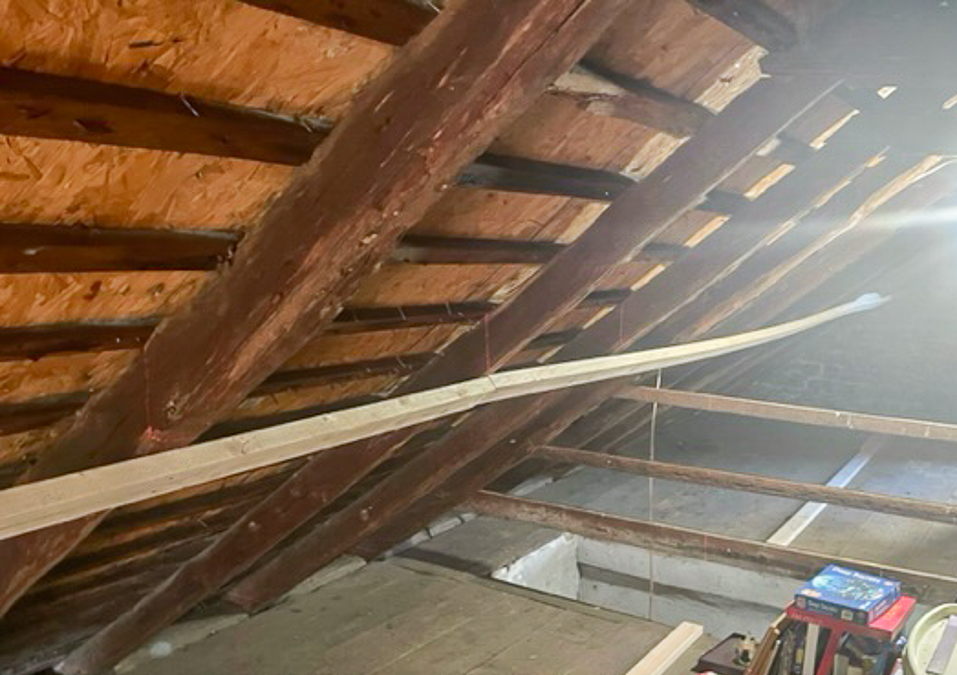
Step 3: Attic Inspection
Check for:
- Cracked or split rafters
- Mold or rot
- Temporary support posts
Step 4: Professional Structural Assessment
Hire a licensed structural engineer (cost: $500–$1,500). This is essential before purchase.
Will a Sagging Roof Affect Mortgage or Insurance Approval?
Yes—and often more than buyers expect.
Mortgage Impact
- FHA and VA loans may deny approval
- Conventional lenders may require repairs before closing
Insurance Impact
Insurers may:
- Refuse coverage
- Exclude roof-related claims
- Demand immediate repairs
Always get insurance approval in writing before finalizing the deal.
Can I Negotiate the Price on a House With a Sagging Roof?
Absolutely—and you should.
Smart Negotiation Strategies
- Request a Structural Credit
Ask for repair cost + 10–20% contingency. - Price Reduction
If repair estimate is $18,000, negotiate $20,000 off list price. - Seller Repairs (With Proof)
Only accept repairs done by licensed contractors.
Realistic Seller Behavior
Many sellers prefer price reductions over managing complex structural repairs themselves.
Pros vs Cons of Buying a House With a Sagging Roof
Pros
✔ Lower purchase price
✔ Strong negotiation leverage
✔ Potential to add equity after repair
✔ Opportunity for investors or experienced buyers
Cons
✖ High repair uncertainty
✖ Structural safety risks
✖ Financing complications
✖ Longer time to move in
When Is It a Bad Idea to Buy?
You should walk away if:
- Structural engineer cannot guarantee repair success
- Sagging is tied to foundation failure
- Seller refuses inspections or credits
- You lack emergency repair funds
In these cases, the roof problem is a red flag—not a bargain.
Case Study: Two Buyers, Two Outcomes
Buyer A (Successful)
- Mild sag from undersized rafters
- $6,500 repair estimate
- Negotiated $9,000 credit
- Completed repairs before move-in
Result: Increased home value and peace of mind.
Buyer B (Unsuccessful)
- Severe sagging from rot and leaks
- Seller disclosure incomplete
- $24,000 repair discovered post-purchase
Result: Financial strain and delayed occupancy.
A Simple Decision Checklist
Ask yourself:
- Is the repair under 5–8% of home value?
- Has a structural engineer evaluated it?
- Can I negotiate enough credit?
- Do I have repair reserves?
If the answer is “no” to most, reconsider the purchase.
FAQ: Should I Buy A House With A Sagging Roof?
1. Is a sagging roof always dangerous?
Not always, but it often indicates structural weakness that should be addressed quickly.
2. Can a sagging roof collapse?
In severe cases, yes—especially when combined with rot or heavy loads.
3. Can I live in the house before repairs?
Minor sagging may be safe short-term, but severe sagging should be repaired immediately.
4. Will fixing a sagging roof increase home value?
Yes. Structural repairs often restore full market value and buyer confidence.
5. How long does repair usually take?
From 3 days for minor fixes to several weeks for major structural rebuilding.
6. Should I rely only on a home inspector?
No. Always involve a structural engineer for sagging roof issues.
Final Thoughts
So, Should I Buy A House With A Sagging Roof?
The answer depends on severity, repair cost, and negotiation outcome. A minor, well-documented issue with proper financial concessions can be a smart opportunity. But significant sagging tied to structural failure is often a costly risk.
Do your due diligence. Bring in experts. Run the numbers carefully.
If this guide helped you make a clearer decision, share it on social media to help other homebuyers avoid expensive surprises.
Leave a Reply