You may have wondered, Are There Solar Panels On The White House Roof? It’s a common question—especially as renewable energy becomes more prominent in national discussions.
The White House is not just a residence. It’s a symbol. Decisions about energy at the presidential home often reflect broader environmental priorities. In this in-depth guide, we’ll explore the history, current status, and significance of solar panels at the White House.
Read too: How Long Do Standing Seam Metal Roofs Last? A Comprehensive Guide to Durability and Longevity
Are There Solar Panels On The White House Roof? The Short Answer
Yes, solar panels have been installed on the White House roof at different times in history, and solar energy systems are currently part of the White House energy infrastructure.
However, the story is more complex than a simple yes or no. Over the past four decades, multiple administrations have installed, removed, and reinstalled solar systems at the executive residence.
For general information about the White House building itself, see:
https://en.wikipedia.org/wiki/White_House
Understanding the building’s history provides context for its energy upgrades.
When Were Solar Panels First Installed on the White House?
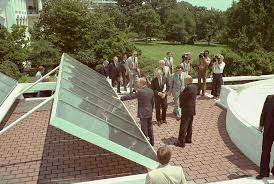
The first solar panels were installed in 1979 under President Jimmy Carter.
Why Were They Installed?
During the 1970s energy crisis, the U.S. faced fuel shortages and rising oil prices. President Carter aimed to promote renewable energy.
The solar panels installed were:
- Solar thermal panels (not photovoltaic)
- Used primarily to heat water
- Symbolic of a shift toward energy independence
This move was widely publicized as a step toward clean energy leadership.
What Happened to Carter’s Solar Panels?
In 1986, during the Reagan administration, the panels were removed.
The official explanation cited roof repairs and maintenance. However, the removal was also seen by some as symbolic of changing energy priorities.
After removal, the panels were:
- Placed in storage
- Later donated for use at educational institutions
The absence of solar panels lasted for more than two decades.
Were Solar Panels Reinstalled Later?
Yes.
In 2010, during President Barack Obama’s administration, solar panels were reinstalled on the White House.
This time, the system included:
- Photovoltaic (PV) panels for electricity generation
- Solar thermal systems for water heating
The installation was part of a broader federal initiative to promote renewable energy and sustainability.
Are Solar Panels Still on the White House Today?
Yes, solar energy systems remain part of the White House infrastructure.
While detailed specifications are not publicly disclosed for security reasons, reports confirm that solar panels continue to contribute to the building’s energy system.
The system is not designed to power the entire White House, but it supplements electricity usage and supports sustainability goals.
What Type of Solar Panels Are Used?
The White House system has included:
- Photovoltaic panels (convert sunlight into electricity)
- Solar thermal collectors (heat water)
Photovoltaic technology works by converting sunlight into electricity using semiconductor materials.
Solar thermal systems use sunlight to heat water for domestic use.
How Much Energy Do the White House Solar Panels Produce?
Exact figures are not widely publicized for security reasons.
However, typical rooftop solar systems can produce:
- 10–20 kilowatts for residential setups
Given the White House’s size and energy needs, solar panels likely represent only a fraction of total consumption.
Still, the installation holds symbolic and educational value.
Why Is Solar at the White House Symbolically Important?
The White House represents national leadership.
When solar panels are installed:
- It signals commitment to renewable energy
- It promotes environmental awareness
- It encourages adoption of clean technologies
Energy policy often reflects broader political and economic priorities.
Does the White House Use Only Solar Power?
No.
The White House relies on multiple energy sources, including:
- Grid electricity
- Backup generators
- Renewable supplements
Solar panels are one component of a larger energy system.
Timeline of Solar Panels at the White House
| Year | Event |
|---|---|
| 1979 | Carter installs solar thermal panels |
| 1986 | Panels removed during Reagan administration |
| 2010 | Obama reinstalls solar systems |
| Present | Solar energy remains part of infrastructure |
The timeline reflects evolving national energy priorities.
Why Were Solar Panels Removed in the 1980s?
The panels were removed primarily during roof renovations.
However, political and policy changes influenced renewable energy priorities at the time.
The removal became a widely discussed symbol of shifting environmental emphasis.
Does Installing Solar at the White House Influence Public Policy?
While solar panels alone do not create legislation, symbolic actions can:
- Increase public awareness
- Inspire private adoption
- Support federal sustainability programs
Symbolic leadership can influence market trends and public perception.
How Does White House Solar Compare to Typical Homes?
Most U.S. homes that install solar systems:
- Offset 50%–100% of electricity usage
- Use net metering programs
- Generate 5–15 kilowatts on average
The White House system is more symbolic and supplemental than fully independent.
Pros and Cons of Solar Panels on Government Buildings
Advantages:
- Demonstrates leadership
- Reduces carbon footprint
- Encourages innovation
- Supports renewable industry
Disadvantages:
- Limited overall impact without broader adoption
- Higher upfront cost
- Security and structural considerations
Step-by-Step: How Solar Panels Work (Simple Explanation)
To understand the White House system, here’s a simplified overview.
Step 1: Sunlight Hits the Panel
Solar cells absorb photons from sunlight.
Step 2: Electricity Is Generated
Semiconductors create an electric current.
Step 3: Inverter Converts Power
The system converts DC power into usable AC electricity.
Step 4: Electricity Is Used or Stored
Power runs appliances or connects to the electrical grid.
Does the White House Set an Example for Homeowners?
Yes, symbolically.
When high-profile buildings adopt solar:
- Public confidence increases
- Market demand grows
- Costs decline through scale
Over the past decade, residential solar installation costs have decreased significantly nationwide.
Is Solar Power Practical for Historic Buildings?
Installing solar panels on historic structures requires:
- Structural assessments
- Aesthetic considerations
- Preservation compliance
The White House demonstrates that renewable technology can integrate into historic architecture.
FAQ – Are There Solar Panels On The White House Roof?
1. Are there currently solar panels on the White House?
Yes, solar systems have been reinstalled and remain part of the infrastructure.
2. Who first installed solar panels at the White House?
President Jimmy Carter in 1979.
3. Why were the original panels removed?
They were removed during roof renovations in the 1980s.
4. Does solar power run the entire White House?
No, it supplements energy usage.
5. What type of solar panels are used?
Both photovoltaic and solar thermal systems have been installed.
6. Is the White House fully powered by renewable energy?
No, it uses a combination of energy sources.
Conclusion
So, Are There Solar Panels On The White House Roof? Yes—solar panels have been installed, removed, and reinstalled over the decades, and they remain part of the building’s energy system today.
Beyond energy production, the panels represent:
- A commitment to renewable innovation
- A symbol of environmental leadership
- An example of integrating modern technology into historic structures
While the White House does not rely entirely on solar power, its use of renewable energy highlights the growing importance of sustainability in national policy.
If this guide helped clarify the history and current status of solar panels at the White House, consider sharing it with others curious about renewable energy and presidential history.
Leave a Reply