Introduction
If you’ve discovered that your old house used 2×4 for roof rafters, you’re not alone — many older homes were built this way, especially before modern insulation standards existed. The challenge is figuring out how to insulate these shallow rafters effectively without causing moisture buildup or reducing ventilation.
This guide explains step-by-step how to insulate your 2×4 roof rafters safely, efficiently, and in line with modern building science.
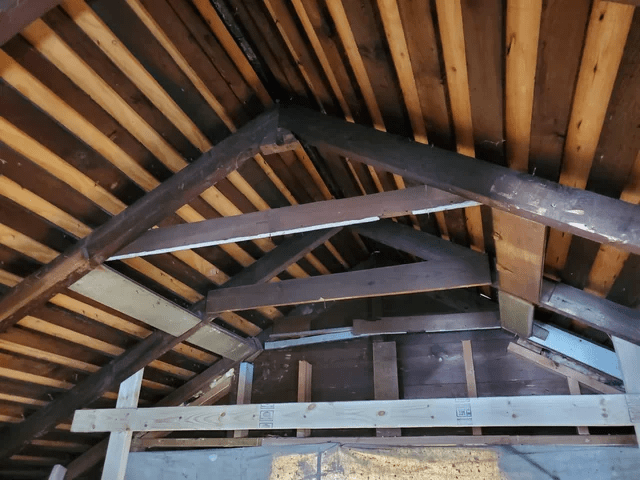
Why Old Houses Have 2×4 Roof Rafters
In homes built before the 1960s, 2×4 rafters were common because builders prioritized structural simplicity over energy efficiency. At that time, insulation wasn’t a major concern, and attics were often left unconditioned.
Read too: How Long Do Standing Seam Metal Roofs Last? A Comprehensive Guide to Durability and Longevity
However, modern homeowners now want better comfort and lower energy bills. The problem? A 2×4 cavity provides only about 3.5 inches of depth, limiting the insulation value you can install.
Expert Insight: The U.S. Department of Energy recommends an attic insulation R-value between R-49 and R-60, but a 2×4 rafter can only hold around R-13 to R-15 with standard fiberglass batts — far below modern efficiency standards.
Understanding the Challenge
Insulating a 2×4 roof is tricky because:
- You have limited space for thick insulation.
- You must maintain airflow between insulation and the roof deck.
- You risk trapping moisture, which can cause rot or mold.
So the goal is balancing thermal performance, ventilation, and moisture control.
Best Insulation Options for 2×4 Rafters
Let’s explore insulation materials that fit shallow cavities while still performing well.
| Insulation Type | R-Value per Inch | Best Use Case | Notes |
|---|---|---|---|
| Closed-cell spray foam | 6.5 – 7 | Max insulation in minimal space | Acts as air & vapor barrier |
| Rigid foam board (polyiso/XPS) | 5 – 6 | Under-rafter application | Adds continuous insulation |
| Mineral wool batts | 3.5 – 4 | Between rafters | Great fire resistance, soundproofing |
| Fiberglass batts | 3 – 3.5 | Budget option | Must ensure ventilation space |
Step-by-Step: How to Insulate 2×4 Roof Rafters
Here’s a simple guide to insulate your old roof effectively:
1. Inspect the Roof and Rafters
Check for rot, leaks, or structural weakness. Repair damaged areas before adding insulation.
2. Measure Rafter Depth and Spacing
Most 2×4 rafters are 3.5 inches deep and spaced 16″ or 24″ on center. You’ll need this data for choosing materials.
3. Maintain Ventilation
Before insulating, install baffle vents (rafter vents) along the roofline to preserve airflow from the soffit to the ridge vent. Leave at least 1 inch of air space between the roof deck and insulation.
4. Choose the Right Insulation Method
Option A: Spray Foam Insulation (Best Performance)
- Apply closed-cell spray foam directly between rafters.
- Fill the cavity completely; no air gap required.
- Achieves up to R-24 in 3.5 inches.
- Seals air leaks and prevents moisture.
(Note: Professional installation recommended.)
Option B: Foam Board + Fiberglass Combo (DIY-Friendly)
- Install 1-inch foam board against the roof deck (R-6).
- Add R-13 fiberglass batts underneath.
- Staple vapor barrier (if needed) and finish with drywall or wood paneling.
- This hybrid method can reach around R-19 to R-21 total.
Option C: Add Rigid Foam Below Rafters
- Attach 2-inch foam boards below the rafters before drywalling.
- This adds continuous insulation and reduces thermal bridging.
Safety Tip: Always wear gloves, goggles, and a respirator when cutting or installing insulation materials.
Comparing the Three Approaches
| Method | Cost | DIY-Friendly | Max R-Value | Moisture Resistance | Lifespan |
|---|---|---|---|---|---|
| Spray Foam | $$$ | No | R-24 | Excellent | 50+ years |
| Foam + Fiberglass | $$ | Yes | R-21 | Good | 30–40 years |
| Rigid Foam Below Rafters | $$ | Yes | R-22+ | Excellent | 40+ years |
Addressing Moisture and Ventilation Concerns
One of the biggest mistakes in old homes is sealing everything too tightly.
Here’s how to avoid condensation and moisture issues:
- Don’t block ventilation channels between insulation and roof sheathing.
- Use vapor-permeable insulation (like mineral wool) if you’re unsure about moisture flow.
- Seal all gaps around lights, vents, and wiring to prevent warm air leaks.
According to the Building Science Corporation, most attic moisture issues occur because of air leaks from living spaces, not the insulation itself.
Bonus: Improving Energy Efficiency Further
To boost your insulation’s performance even more:
- Add blown-in cellulose to the attic floor if your attic is unconditioned.
- Install radiant barriers under the roof sheathing in hot climates.
- Upgrade attic ventilation with ridge and soffit vents.
- Consider roof replacement — adding insulation above the roof deck during reroofing can dramatically improve R-value.
For a broader understanding of insulation materials, visit Wikipedia’s insulation overview.
FAQ Section
Q1: Can you insulate a roof with only 2×4 rafters?
A: Yes, but you need high-R materials like closed-cell spray foam or foam boards to meet modern energy standards.
Q2: Do I need ventilation if I use spray foam?
A: Not necessarily. Closed-cell spray foam creates an airtight barrier, so ventilation channels aren’t required unless using open-cell foam.
Q3: What is the best insulation R-value for 2×4 rafters?
A: Aim for R-19 to R-24 if possible. You can add rigid foam below rafters to increase total R-value.
Q4: Can I use fiberglass batts alone?
A: You can, but it provides limited R-value (around R-13) and requires an air gap for ventilation — not ideal for cold climates.
Q5: How much does it cost to insulate 2×4 rafters?
A: Expect to spend $3–$6 per sq ft for fiberglass or foam board, and $5–$9 per sq ft for spray foam installation.
Q6: Will adding insulation reduce my heating bills?
A: Yes. Homeowners typically save 10–20% on energy bills after insulating roof cavities properly.
Conclusion
If your old house used 2×4 for roof rafters, don’t worry — with the right approach, you can insulate effectively without tearing out the entire roof. Use high-R insulation like spray foam or foam boards, ensure proper ventilation, and seal air leaks to prevent moisture problems.
Proper insulation doesn’t just improve comfort — it boosts your home’s energy efficiency, lowers utility costs, and protects your roof for decades to come.

Leave a Reply