If you’ve ever looked at a modern, box-shaped home and wondered, “What do you call a house with a flat roof?”—you’re not alone. Many homeowners and buyers are curious about this distinctive architectural style. In this guide, we’ll break down the exact term, why it’s used, and everything you should know before choosing or building a flat-roof house.
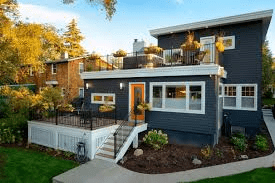
What Do You Call a House With a Flat Roof?
A house with a flat roof is commonly called a Flat Roof House, Modernist House, or Contemporary House. More traditional architectural terms include Mid-Century Modern, International Style Home, and Minimalist House—all known for their flat or nearly flat rooflines.
In construction, these roofs are categorized as low-slope roofs, typically pitched at 1–10 degrees to allow water drainage.
Why Do Some Homes Have Flat Roofs?
Flat roofs are chosen for aesthetic, functional, and climate-specific reasons. They offer a modern appearance, maximize usable space, and are easier to construct compared to angled roofs in certain environments.
Read too: How Long Do Standing Seam Metal Roofs Last? A Comprehensive Guide to Durability and Longevity
Types of Houses With Flat Roofs (Most Common Styles)
1. Modernist or Contemporary House
Modernist homes are known for clean lines, large windows, and minimalist structures. They often feature:
- Flat or low-slope roofs
- Open floor plans
- Emphasis on natural light
- Box-shaped silhouettes
This style originated in the early 20th century and remains a top choice for homeowners seeking a sleek, urban look.
2. Mid-Century Modern Home
Popular between the 1940s–1970s, this style blends indoor–outdoor living.
Key features:
- Flat or low-pitched roofs
- Large glass panels
- Integration with nature
- Simple geometric shapes
These homes are widely found in California, Arizona, and Florida.
3. International Style House
Originating in Europe, this design prioritizes functionality over ornamentation.
Traits:
- Flat roofs with parapet walls
- Smooth surfaces
- White or neutral color palette
- Steel and concrete usage
This style also influenced modern commercial buildings.
4. Minimalist Home
Minimalist homes emphasize simplicity: fewer materials, fewer lines, more open space.
Common flat-roof features include:
- Seamless roof edges
- Simple rectangular massing
- Integrated rooftop spaces
How Does a Flat Roof Work?
Flat roofs aren’t perfectly flat—they usually have a slight pitch. A well-designed flat roof includes:
- Low-slope structure (1–10° angle)
- Waterproof membrane (EPDM, TPO, PVC, or modified bitumen)
- Drainage system (scuppers, interior drains, gutters)
- Insulation layer
- Surface protection (gravel, rubber, or coatings)
Pros and Cons of a Flat Roof House
Below is a clear comparison to help you decide:
Advantages vs. Disadvantages
| Advantages | Disadvantages |
|---|---|
| Cost-efficient construction | Requires more frequent maintenance |
| Modern, sleek aesthetics | May not suit heavy rainfall areas |
| Allows rooftop patios or gardens | Drainage issues if poorly designed |
| Easy to install solar panels | Shorter lifespan than pitched roofs |
| Efficient use of space | Limited insulation in extreme climates |
Is a Flat Roof House Right for You?
A flat roof house is ideal if you want:
- A modern architectural look
- Additional usable space (rooftop deck)
- A cost-friendly building solution
- Simplicity in structure and design
It may not be ideal if you live in an area with heavy snow, extreme rainfall, or poor roof maintenance access.
Most Popular Roofing Materials for Flat Roof Houses
1. TPO (Thermoplastic Polyolefin)
Affordable, energy-efficient, and heat-reflexive. Common in modern construction.
2. EPDM Rubber
Durable and cost-effective. Known to last 25–30 years.
3. PVC Roofing
More expensive but highly resistant to chemicals and fire.
4. Modified Bitumen
A classic choice with multi-layer protection.
5. Built-Up Roofing (BUR)
Made from several layers of tar and gravel. Heavier but long-lasting.
Where Are Flat Roof Houses Most Popular?
Flat roof houses are especially common in:
- Desert climates (Arizona, Nevada, Utah)
- Urban areas with modern buildings
- Regions prioritizing modern architecture
- Hot and dry climates where snow load is minimal
Historically, flat roofs were used in Middle Eastern and Mediterranean homes (source: Wikipedia) to adapt to hot climates.
(External Link Included: Roofing system – Wikipedia)
Can You Add a Flat Roof to an Existing Home?
Yes, but it depends on:
- The current roof structure
- Local building codes
- Weight-bearing capacity
- Architectural feasibility
A structural engineer should inspect load requirements, especially when adding features like a rooftop deck or HVAC equipment.
Flat Roof House Ideas & Inspiration
1. Rooftop Patio
Turn your roof into a relaxing outdoor lounge.
2. Solar Roof Installation
Flat roofs are ideal for mounting solar panels at optimal angles.
3. Green Roof (Rooftop Garden)
Helps with insulation and reduces heat.
4. Minimalist Box-Style Home
Clean, squared designs that emphasize simplicity.
5. Industrial-Modern Look
Using steel, concrete, and exposed finishes.
Flat Roof vs. Pitched Roof: Which Is Better?
| Category | Flat Roof | Pitched Roof |
|---|---|---|
| Aesthetic | Modern | Traditional |
| Cost | Lower | Higher |
| Maintenance | Higher | Lower |
| Weather resistance | Moderate | Superior |
| Usable space | High (roof deck) | Low |
| Drainage | Requires special design | Natural slope |
Conclusion: Choose based on climate, budget, and desired home style.
FAQ (H2)
1. What do you call a house with a flat roof?
It is commonly called a Flat Roof House, Modernist House, or Contemporary House. Some architectural terms also refer to it as a Mid-Century Modern or International Style home.
2. What is the purpose of a flat roof?
Flat roofs maximize usable space, reduce construction costs, and offer a sleek modern aesthetic. They also allow for rooftop decks, solar panels, or HVAC placement.
3. Are flat roofs more expensive to maintain?
Yes. Flat roofs typically require more maintenance because drainage issues can occur if they are not properly designed. However, with high-quality materials, they can last 20–30 years.
4. Do flat roofs leak more?
Not inherently. Leaks occur when drainage is poor, when membranes age, or when flashing fails. Proper installation significantly reduces risks.
5. Can flat roofs handle heavy rain?
Yes, but only if the roof has adequate slope (1–10°), a strong waterproof membrane, and a functioning drainage system.
6. How long does a flat roof last?
EPDM can last 25–30 years, PVC can last 20–25 years, and TPO typically lasts 15–20 years depending on climate and maintenance.
Conclusion
Now you know exactly what you call a house with a flat roof—from architectural names to construction types. Flat roofs offer modern aesthetics, flexible space, and unique design advantages. If this guide helped you, feel free to share it on your social media so others can learn too!
Leave a Reply