Living in a hot climate comes with unique challenges—especially when it comes to keeping your home cool and energy-efficient. Many homeowners ask What Kind Of Roofs Do Houses In Hot Places Have because the wrong roof can trap heat, raise energy bills, and reduce comfort year-round. In this guide, you’ll learn which roof materials and designs work best in hot regions, why they’re effective, and how to choose the right solution for your climate and budget.
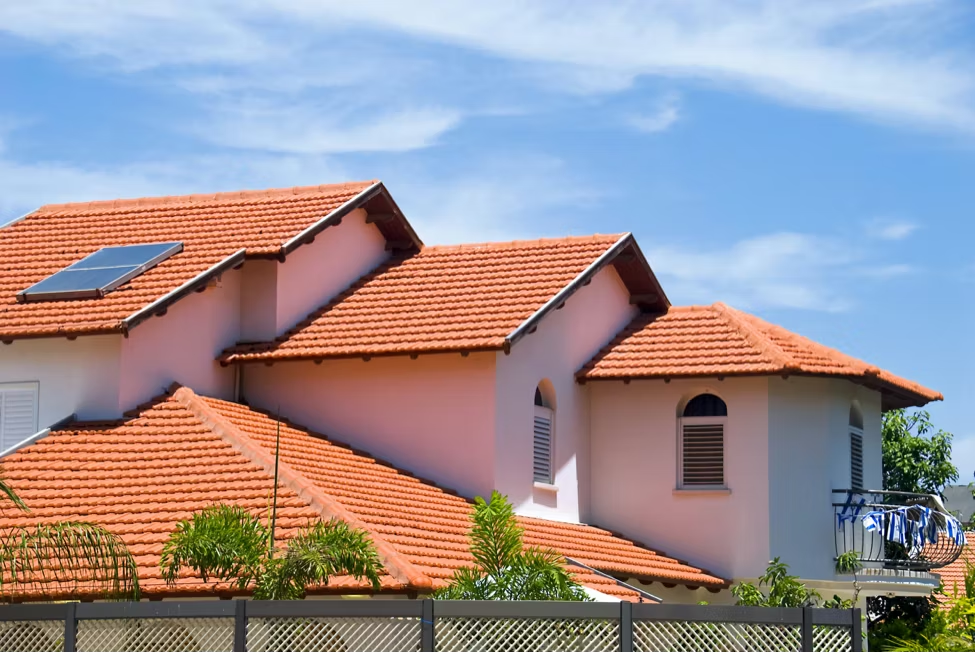
Why Roofing Matters More in Hot Climates
How Roofs Affect Indoor Temperature
In hot places, roofs can absorb up to 70% of the sun’s heat, making them the largest contributor to indoor temperature gain. Poor roof choices can increase attic temperatures to 150°F (65°C) or more, forcing air conditioners to work harder.
Well-designed roofs in hot climates focus on:
- Reflecting solar radiation
- Releasing trapped heat
- Allowing airflow and ventilation
- Minimizing heat transfer into living spaces
This is why roof material, color, and shape are critical.
Read too: How Long Do Standing Seam Metal Roofs Last? A Comprehensive Guide to Durability and Longevity
What Kind Of Roofs Do Houses In Hot Places Have?
The Short Answer
Homes in hot climates typically use roofs that are:
- Heat-reflective
- Well-ventilated
- Made from materials with high thermal resistance
The most common roof types include:
- Clay or concrete tile roofs
- Metal roofs
- Flat or low-slope roofs with reflective coatings
- Cool roofs (special reflective systems)
- Thatch or natural roofs (in some regions)
Each option is designed to reduce heat buildup in different ways.
Clay and Concrete Tile Roofs
Why Tile Roofs Are Common in Hot Regions
Clay and concrete tiles are among the most popular roofing materials in hot climates, especially in Mediterranean, Middle Eastern, and tropical regions.
Key benefits:
- Natural air gaps beneath tiles reduce heat transfer
- Excellent thermal mass slows heat absorption
- Long lifespan (50+ years)
- Fire-resistant and durable
Tile roofs are commonly seen in hot places like the southwestern United States, southern Europe, and parts of Latin America.
Clay vs Concrete Tiles
| Feature | Clay Tile | Concrete Tile |
|---|---|---|
| Weight | Lighter | Heavier |
| Color | Natural earth tones | Wider color range |
| Heat resistance | Excellent | Excellent |
| Cost | Higher | Lower |
Both perform exceptionally well in hot climates when properly installed.
Metal Roofs: Surprisingly Effective in Hot Weather
Do Metal Roofs Make Homes Hotter?
This is a common myth. In reality, metal roofs are excellent for hot climates when designed correctly.
Why metal works well:
- Highly reflective surface
- Rapid heat dissipation
- Lightweight and durable
- Compatible with reflective coatings
According to building efficiency studies, reflective metal roofs can reduce cooling costs by 10–25% in hot regions.
Best Metal Roof Finishes for Hot Places
- White or light gray
- Matte aluminum
- Reflective coated steel
Avoid dark, glossy finishes, which absorb more heat.
Flat and Low-Slope Roofs in Hot Climates
Why Flat Roofs Are Popular in Hot Regions
Flat or low-slope roofs are common in desert and tropical areas because they are:
- Easy to build
- Ideal for reflective coatings
- Suitable for solar panels
These roofs are often paired with cool roof membranes that reflect sunlight and reduce heat absorption.
Cool Roofs: Designed Specifically for Heat
What Is a Cool Roof?
A cool roof is not a single material but a roofing system designed to reflect more sunlight and absorb less heat.
Features include:
- High solar reflectance
- High thermal emittance
- Specialized coatings or membranes
Cool roofs can lower roof surface temperatures by 50–60°F (28–33°C) compared to traditional dark roofs.
For general background on roof design and materials, see Wikipedia’s article on roofs, which explains how different roof systems perform in various climates.
Roof Color: One of the Most Important Factors
Why Light-Colored Roofs Dominate Hot Places
Color has a major impact on heat absorption.
Light-colored roofs:
- Reflect more sunlight
- Stay significantly cooler
- Reduce indoor heat gain
Studies show that white or light-colored roofs can reflect up to 80% of solar radiation, compared to dark roofs that may reflect only 20%.
Roof Shape and Design in Hot Climates
Steep vs Flat Roofs
Both can work—but for different reasons.
- Steep roofs:
Improve airflow, create attic ventilation, and reduce heat transfer. - Flat roofs:
Maximize reflective surfaces and simplify insulation strategies.
The key is ventilation, not just shape.
Ventilation: The Hidden Key to Cooling
Why Ventilation Matters More Than Material Alone
Even the best roofing material will fail without proper airflow.
Effective hot-climate roofs include:
- Ridge vents
- Soffit vents
- Ventilated air gaps
- Attic exhaust systems
Good ventilation can reduce attic temperatures by 30–40°F (17–22°C).
Natural Roofing in Extremely Hot Regions
Thatch and Earth-Based Roofs
In some hot regions, especially rural or traditional areas, natural materials are still used.
Examples include:
- Thatch roofs
- Palm leaf roofing
- Earth-covered roofs
These materials provide excellent insulation but require higher maintenance and are less common in modern housing.
Comparing Roof Types for Hot Places
| Roof Type | Heat Resistance | Lifespan | Maintenance | Cost |
|---|---|---|---|---|
| Clay tile | Excellent | 50+ yrs | Low | High |
| Concrete tile | Excellent | 40–50 yrs | Low | Medium |
| Metal | Very good | 40–70 yrs | Very low | Medium |
| Cool roof | Excellent | 20–40 yrs | Low | Medium |
| Flat roof membrane | Good–Very good | 20–30 yrs | Medium | Low–Medium |
Step-by-Step: How to Choose the Right Roof for a Hot Climate
- Analyze your local climate (dry heat vs humid heat)
- Choose light-colored, reflective materials
- Prioritize ventilation and insulation
- Consider energy efficiency ratings
- Match roof design to your home’s architecture
- Plan for long-term durability, not just cost
This approach ensures comfort, savings, and longevity.
Common Roofing Mistakes in Hot Places
- Choosing dark-colored roofs
- Ignoring ventilation
- Using materials not rated for high heat
- Focusing only on upfront cost
- Skipping reflective coatings
These mistakes often lead to higher energy bills and premature roof failure.
Pros and Cons of Hot-Climate Roofs
Advantages
- Lower indoor temperatures
- Reduced air conditioning costs
- Longer roof lifespan
- Improved comfort
Disadvantages
- Some materials have higher upfront costs
- Installation requires expertise
- Not all styles suit every home design
Despite this, the long-term benefits usually outweigh the drawbacks.
Does the Right Roof Reduce Energy Bills?
Yes. Energy studies consistently show that heat-reflective roofing can reduce cooling energy use by 15–30%, depending on climate and home design.
This makes roofing one of the most cost-effective upgrades for homes in hot places.
FAQ – What Kind Of Roofs Do Houses In Hot Places Have
❓ What roof material is best for extreme heat?
Clay tiles, metal roofs with reflective coatings, and cool roof systems perform best.
❓ Are flat roofs good for hot climates?
Yes, especially when paired with reflective membranes and proper insulation.
❓ Do metal roofs increase indoor heat?
No. Reflective metal roofs often keep homes cooler than traditional shingles.
❓ What roof color is best in hot places?
White, light gray, beige, or pastel shades are ideal.
❓ Is ventilation more important than material?
Both matter, but ventilation is critical for long-term cooling performance.
Conclusion
If you’re wondering What Kind Of Roofs Do Houses In Hot Places Have, the answer lies in heat-reflective materials, smart design, and proper ventilation. Clay tiles, metal roofs, cool roofs, and well-designed flat roofs dominate hot regions for good reason—they keep homes cooler, reduce energy costs, and last longer under intense sun.
Choosing the right roof is one of the smartest investments you can make for comfort and efficiency in hot climates. If this guide helped you understand your options, share it on social media so others can build or upgrade smarter, cooler homes too.
Leave a Reply