Have you ever wondered, What Simple Machine Is A Roof On A House? It might seem like a basic structure that simply protects your home from rain and snow—but in physics, a roof represents something much more fascinating.
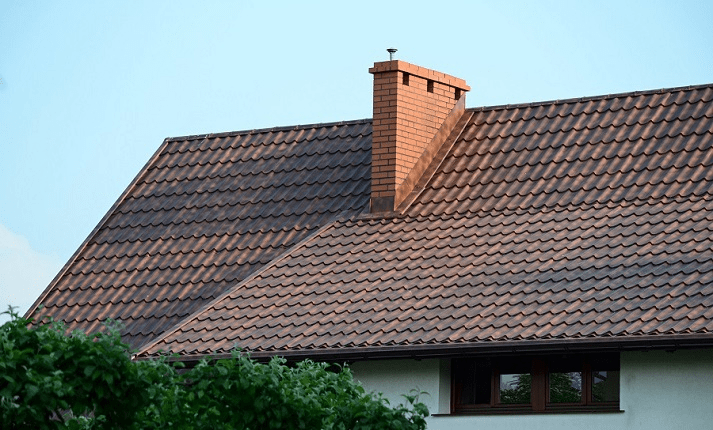
Understanding the science behind your roof can help students, homeowners, and DIY enthusiasts connect everyday life with fundamental engineering principles. Let’s break it down in a clear, practical way.
What Simple Machine Is A Roof On A House?
The direct answer to What Simple Machine Is A Roof On A House is:
A roof functions as an inclined plane.
An inclined plane is one of the six classical simple machines. It is a flat surface set at an angle against a horizontal surface.
Read too: Hail Damage Roof Repair: Essential Guide to Restoring Your Home’s Protection
For a detailed scientific definition, you can reference the explanation of inclined planes on Wikipedia:
https://en.wikipedia.org/wiki/Inclined_plane
Why Is a Roof an Inclined Plane?
A sloped roof:
- Is angled rather than flat
- Redirects force downward
- Helps move water, snow, and debris off the surface
- Reduces the effort required for gravity to act on objects
In physics terms, an inclined plane reduces the force needed to move objects vertically by spreading that force over a longer distance.
Your roof uses this same principle—just in reverse.
What Are the 6 Simple Machines?
Before going deeper, let’s quickly review the six classical simple machines:
| Simple Machine | Basic Function |
|---|---|
| Lever | Moves loads around a pivot |
| Wheel and Axle | Reduces friction |
| Pulley | Changes direction of force |
| Inclined Plane | Reduces force by increasing distance |
| Wedge | Splits materials |
| Screw | Converts rotation into movement |
A roof most closely resembles an inclined plane because it is a slanted surface designed to manage force and gravity efficiently.
How Does a Roof Work Like an Inclined Plane?
Let’s simplify the physics.
An inclined plane allows an object to move upward with less force by extending the distance over which force is applied.
In a roof’s case:
- Gravity pulls rain and snow downward.
- The sloped surface allows these elements to slide off.
- The angle reduces accumulation.
- Structural framing supports distributed weight.
Real-World Example
Imagine lifting a 100-pound box straight up versus pushing it up a ramp.
The ramp requires less force because the effort is spread over distance.
A roof does something similar with environmental loads:
- Snow doesn’t pile vertically.
- Rain doesn’t pool.
- Debris slides away naturally.
This is applied physics in action.
Why Don’t All Houses Have Flat Roofs?
Flat roofs do exist, especially in commercial buildings. But from a mechanical perspective:
- Flat roofs do not function effectively as inclined planes.
- Water pooling increases structural stress.
- Drainage systems must compensate artificially.
According to the U.S. Department of Energy, sloped roofs generally perform better in areas with heavy rainfall or snow due to natural drainage efficiency.
In residential construction across the United States:
- Approximately 70% of homes use pitched roofs
- Sloped designs reduce long-term maintenance costs
- Insurance companies often prefer pitched roofs in snow-prone regions
The inclined plane principle plays a major role in these design choices.
How Does Roof Angle Affect Its Function as a Simple Machine?
The steeper the slope:
- The faster snow and water slide off
- The less weight accumulates
- The greater the mechanical efficiency
However, there’s balance required.
Comparison: Roof Slope and Performance
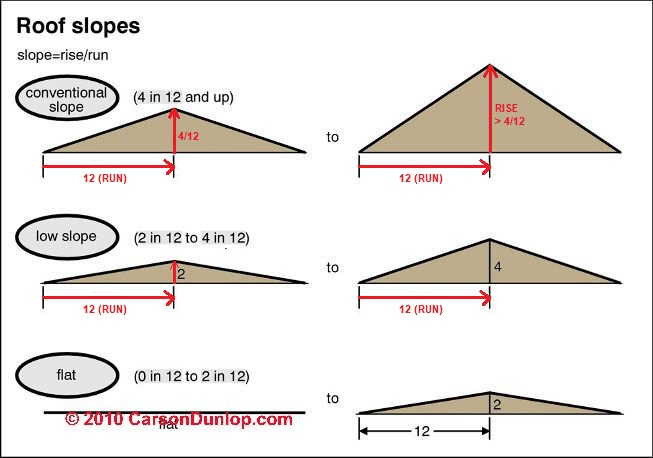
| Roof Angle | Performance Impact |
|---|---|
| 2:12 (Low slope) | Slower drainage |
| 4:12–6:12 | Standard efficiency |
| 8:12+ | Excellent snow shedding |
A typical American home has a pitch between 4:12 and 9:12, which optimizes structural strength and drainage.
Does a Roof Provide Mechanical Advantage?
Yes — but indirectly.
Mechanical advantage in physics means reducing effort by increasing distance.
For roofs:
- The slope increases the distance water travels.
- This reduces pressure buildup.
- Structural beams distribute force evenly.
Engineers design roof framing systems to manage live loads (snow, wind) and dead loads (materials).
According to structural engineering standards, snow loads in northern U.S. states can exceed 30–70 pounds per square foot. A sloped roof reduces accumulation compared to a flat surface.
Step-by-Step: How to Demonstrate a Roof as an Inclined Plane (Simple Experiment)
If you’re teaching this concept, try this hands-on demonstration.
Materials Needed:
- Wooden board (24 inches long)
- Stack of books
- Small ball
- Protractor
- Measuring tape
Step 1: Create the Incline
Place one end of the board on a stack of books at a 30° angle.
Step 2: Measure the Height
Ensure the vertical rise is about 12 inches.
Step 3: Roll the Ball
Place the ball at the top and release.
Step 4: Observe Motion
Notice how gravity pulls it down without additional force.
This mimics how rainwater behaves on a roof.
How Is a Roof Different From a Ramp?
Both are inclined planes, but they serve different purposes.
| Feature | Roof | Ramp |
|---|---|---|
| Purpose | Drainage & protection | Move objects upward |
| Force Direction | Downward (gravity-assisted) | Upward (force applied) |
| Load Type | Environmental | Human or mechanical |
The principle is identical — only the application differs.
Can a Roof Be Another Simple Machine?
Generally, no.
A roof is not:
- A lever (no pivot movement)
- A pulley (no rope system)
- A screw (no rotational force)
- A wedge (not splitting materials)
However, some roof components incorporate other simple machines:
- Roofing nails function like wedges.
- Spiral fasteners act like screws.
- Cranes used in construction use pulleys.
But the roof surface itself remains an inclined plane.
How Roof Design Combines Physics and Architecture
Modern roofing systems integrate:
- Load distribution engineering
- Wind uplift calculations
- Thermal expansion management
- Gravity-driven drainage systems
In hurricane-prone areas like Florida:
- Roof pitch between 4:12 and 7:12 performs best against wind uplift.
- Extremely steep roofs may increase lift forces.
This shows how physics principles guide real-world home construction.
Advantages vs Disadvantages of a Sloped Roof (Inclined Plane Design)
Advantages
- Efficient drainage
- Snow shedding
- Reduced structural stress
- Longer lifespan
- Energy efficiency in some climates
Disadvantages
- Higher framing cost
- More materials required
- Increased labor complexity
Despite these costs, the mechanical advantages usually outweigh the drawbacks in residential settings.
FAQ Section
1. What simple machine is a roof on a house?
A roof functions as an inclined plane because it is a sloped surface that helps gravity move water, snow, and debris downward efficiently.
2. Why is a roof considered an inclined plane?
Because it reduces the vertical buildup of weight by spreading force across a slanted surface, allowing gravity to do the work.
3. Are flat roofs simple machines?
Flat roofs are not effective inclined planes because they lack slope. They rely on drainage systems rather than mechanical advantage.
4. Does roof pitch affect structural safety?
Yes. Steeper roofs reduce snow load accumulation but must be engineered to handle wind uplift and framing stress.
5. Can I explain roof physics to kids easily?
Yes. Use a board and a ball to demonstrate how gravity pulls objects down a slope. This mirrors how rain moves off a roof.
6. Why don’t all homes use very steep roofs?
Very steep roofs increase construction cost, require safety equipment, and may experience higher wind uplift forces in storm zones.
Conclusion
So, What Simple Machine Is A Roof On A House?
The answer is clear: an inclined plane.
Your roof isn’t just a protective covering—it’s a practical application of basic physics principles that have been used for thousands of years. By using slope and gravity, it naturally manages environmental forces like rain and snow.
Understanding this concept helps students connect classroom science to real life, and it helps homeowners appreciate the engineering built into their property.
If you found this guide helpful, share it on social media to help others understand the science behind everyday structures.
Leave a Reply