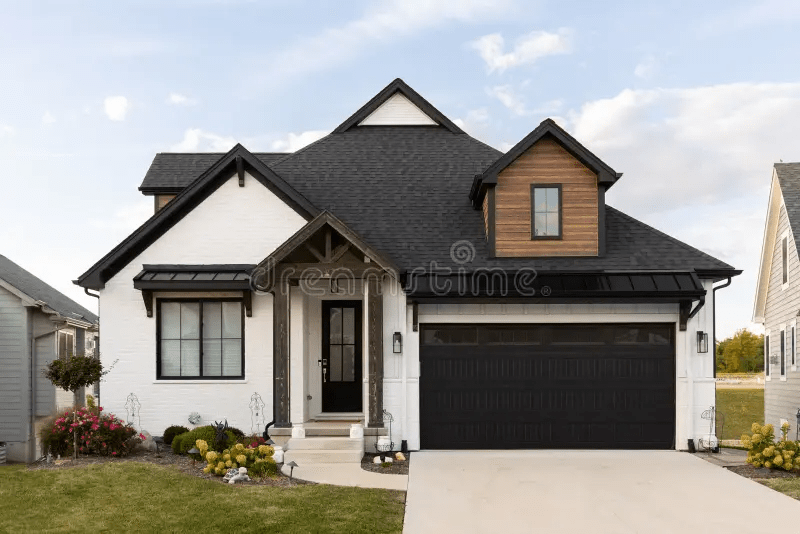
A white coach style house with brown brick and black roof is a classic exterior combination that blends elegance, warmth, and structure. Many homeowners choose this look because it feels timeless yet upscale, without being overly trendy. In this guide, you’ll learn why this design works so well, how to balance the colors correctly, and how to avoid common exterior design mistakes.
What Is a Coach Style House?
A coach style house draws inspiration from historic European carriage homes and early American estates. These homes were originally designed to house horses and carriages, later evolving into refined residential architecture.
Key characteristics of coach style homes:
- Symmetrical or balanced façades
- Brick or stone masonry
- Steep or medium-pitch roofs
- Traditional windows with divided panes
- Elegant but restrained detailing
Read too: How Long Do Standing Seam Metal Roofs Last? A Comprehensive Guide to Durability and Longevity
Coach-style architecture emphasizes proportion and contrast, which makes the white, brown brick, and black roof combination especially effective.
For general background on coach house architecture, you can explore Wikipedia:
https://en.wikipedia.org/wiki/Coach_house
Why White Works as the Primary Exterior Color
White is often chosen as the main exterior color because it creates a clean and refined foundation.
Benefits of a white exterior:
- Enhances architectural details
- Reflects light, making the home appear larger
- Works across traditional and transitional styles
- Pairs easily with brick, stone, and dark accents
In coach-style homes, white helps highlight symmetry and trim details without overpowering the brickwork.
The Role of Brown Brick in Coach Style Homes
Brown brick adds warmth, texture, and historical depth to the exterior.
Why brown brick works so well:
- Grounds the home visually
- Adds natural variation and character
- Softens the starkness of white surfaces
- Feels timeless rather than trendy
Brown brick also ages gracefully, developing character over time instead of looking dated.
Why a Black Roof Is the Perfect Finishing Touch
A black roof anchors the entire color scheme and adds visual authority.
Advantages of a black roof:
- Creates strong contrast against white walls
- Complements warm brown brick tones
- Defines rooflines clearly
- Works across nearly all architectural styles
Black roofing also hides discoloration better than lighter colors, making it a practical choice as well as a design one.
How These Three Colors Work Together
The success of a white coach style house with brown brick and black roof lies in balance.
Visual hierarchy:
- Black roof – frames the home and adds structure
- White exterior – highlights form and symmetry
- Brown brick – adds warmth and texture
This hierarchy prevents any single element from dominating the design.
Best Roofing Materials for a Black Roof
Not all black roofs are created equal. Material choice matters.
Popular options:
- Architectural asphalt shingles – Affordable, durable, classic look
- Standing seam metal (black) – Elegant and long-lasting
- Composite shingles – Mimic slate with less weight
Architectural asphalt shingles remain the most common choice due to cost efficiency and visual depth.
Trim, Windows, and Accent Colors
To complete the exterior, details must align with the main palette.
Recommended accent colors:
- Black or charcoal window frames
- Soft white or cream trim
- Natural wood front doors
- Aged bronze or matte black hardware
Avoid bright or cool-toned accents that clash with the warm brown brick.
Black Roof vs Dark Grey Roof (Quick Comparison)
| Feature | Black Roof | Dark Grey Roof |
|---|---|---|
| Contrast with white | Very high | Moderate |
| Formal appearance | Strong | Softer |
| Timeless appeal | Excellent | Excellent |
| Coach-style suitability | Ideal | Good |
Black roofs tend to feel more traditional and stately, which suits coach-style homes perfectly.
Curb Appeal and Home Value Impact
Exterior design directly affects buyer perception.
Industry data consistently shows:
- Homes with classic neutral exteriors sell faster
- High-contrast color schemes photograph better
- Brick exteriors are perceived as higher quality
A white coach style house with brown brick and black roof communicates stability, craftsmanship, and long-term value.
Step-by-Step: Designing This Exterior Successfully
If you’re planning a renovation or new build, follow these steps.
Step 1: Choose the Right White
- Avoid stark, blue-toned whites
- Opt for warm or soft whites
Step 2: Select Complementary Brown Brick
- Medium to dark brown with subtle variation
- Avoid overly red or orange brick tones
Step 3: Install a Matte or Low-Gloss Black Roof
- Reduces glare
- Looks more refined
Step 4: Coordinate Trim and Accents
- Keep all accents within a neutral palette
- Limit accent colors to 1–2 tones
Common Design Mistakes to Avoid
- Using bright white with cool undertones
- Mixing black roof with warm brown trim
- Overusing black on doors, shutters, and gutters
- Ignoring brick undertone consistency
Small mismatches can disrupt an otherwise elegant exterior.
Maintenance and Climate Considerations
This color scheme performs well across most U.S. climates.
Maintenance tips:
- Clean white surfaces annually with low-pressure wash
- Inspect brick mortar every 3–5 years
- Check black roofs for heat buildup in extreme climates
Modern roofing materials minimize heat absorption issues, even with black shingles.
Is This Style Right for Your Home?
This exterior style is ideal if you:
- Prefer timeless over trendy design
- Want strong resale appeal
- Own a traditional or transitional home
- Value balance and symmetry
It may not suit ultra-modern or minimalist architecture, where softer contrasts are preferred.
FAQ: White Coach Style House With Brown Brick and Black Roof
Q1: Is a black roof too hot for warm climates?
Modern black roofing materials are designed with reflective granules that help manage heat effectively.
Q2: Should trim always be white on a coach-style house?
Most often yes, but soft cream or light greige can also work beautifully.
Q3: Can I mix stone with brown brick?
Yes, as long as stone tones are warm and complement the brick color.
Q4: Does this color scheme work on smaller homes?
Yes. White walls visually enlarge the home, while brick adds depth.
Q5: Will this exterior style look dated?
No. This combination has remained popular for decades and continues to perform well in resale markets.
Conclusion
A white coach style house with brown brick and black roof is a proven exterior design that balances elegance, warmth, and durability. It enhances curb appeal, supports long-term value, and works across a wide range of climates and neighborhoods. When executed with the right tones and materials, this look remains timeless—not trendy.
If you found this guide helpful, share it on social media to inspire other homeowners planning their exterior upgrades. 🏡✨
Leave a Reply