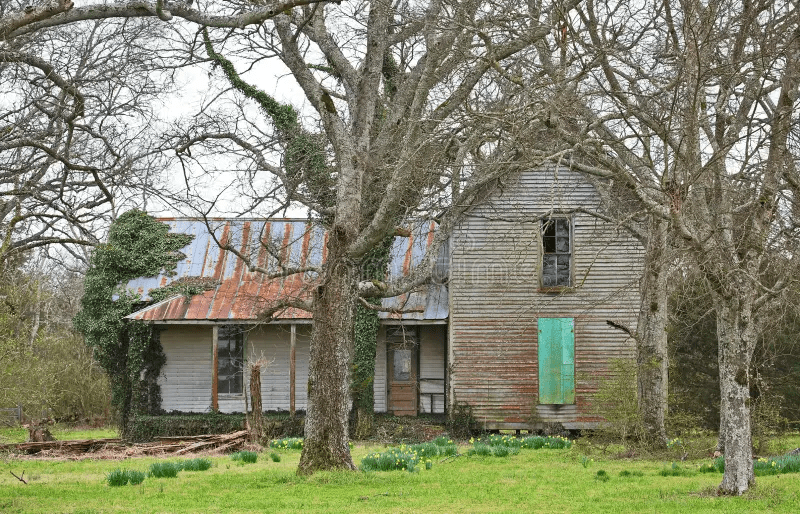
The image of a white house with a green tin roof abandoned in TN near Throne Hill sparks curiosity for many people—homeowners, photographers, historians, and explorers alike. Why are so many rural Tennessee homes left behind, and what stories do they hold? In this article, we explore the architectural style, historical context, and real reasons why homes like this become abandoned, while also discussing preservation, safety, and restoration potential.
Why Abandoned Houses in Rural Tennessee Are So Common
Rural areas across Tennessee are dotted with abandoned homes, especially older farmhouses and small family dwellings.
Key reasons include:
- Decline of small-scale farming
- Migration to cities for jobs
- Aging property owners with no heirs
- High renovation costs compared to property value
Read too: How Long Do Standing Seam Metal Roofs Last? A Comprehensive Guide to Durability and Longevity
According to housing and census trends, rural counties across the southeastern U.S. have seen steady population decline since the mid-20th century, leaving many homes vacant.
Understanding the Setting: Tennessee’s Rural Landscape
Tennessee has a long tradition of rural living, particularly in its eastern and central regions.
Characteristics of rural Tennessee homes:
- Built between the late 1800s and early 1900s
- Located near hills, creeks, or farmland
- Constructed with locally available materials
- Designed for practicality, not luxury
Areas near small communities like Throne Hill (often locally referenced rather than officially mapped) typically consist of family land passed down through generations.
Architectural Features of a White House With Green Tin Roof
At first glance, this abandoned white house may look simple—but its design reflects practical rural architecture.
Common exterior features:
- White-painted wood siding (easy to repaint and maintain)
- Green tin (metal) roof for durability and rain runoff
- Rectangular footprint for efficient construction
- Covered front porch (often collapsed over time)
This combination was especially popular in Appalachian and Southern rural homes.
Why Green Tin Roofs Were So Popular
Green metal roofs weren’t chosen randomly—they were practical.
Advantages of tin (metal) roofs:
- Long lifespan (40–70 years)
- Excellent rain shedding
- Fire-resistant
- Lighter than clay or slate
Green paint was commonly used because it:
- Blended naturally with wooded landscapes
- Hid rust better than lighter colors
- Was widely available from regional suppliers
For historical context on metal roofing, see Wikipedia:
https://en.wikipedia.org/wiki/Metal_roof
What Causes Homes Like This to Be Abandoned?
A white house with green tin roof abandoned in TN near Throne Hill usually becomes vacant due to multiple overlapping factors.
Most common causes:
- Economic shifts – Loss of farming or mining income
- Inheritance complications – Multiple heirs, unclear titles
- Maintenance backlog – Roof leaks, foundation issues
- Modern housing preferences – Smaller rooms, no insulation
- Location challenges – Distance from schools, hospitals, jobs
Once a home is vacant for several years, deterioration accelerates rapidly.
Signs a House Has Been Abandoned for Decades
You can often estimate abandonment length by visual cues.
Common indicators:
- Roof rust or sagging
- Broken or boarded windows
- Overgrown vegetation close to the structure
- Porch collapse
- Interior exposure to weather
In Tennessee’s humid climate, wood rot and mold can begin within just a few years of neglect.
Is the House Structurally Dangerous?
Yes—abandoned houses can be hazardous.
Potential risks:
- Weak floors and staircases
- Rusted roofing panels
- Mold and mildew
- Wildlife nesting (snakes, raccoons, bats)
- Unstable chimneys
Entering abandoned structures without permission or professional inspection is unsafe and often illegal.
Can Homes Like This Be Restored?
Surprisingly, many abandoned rural homes can be restored, but cost and intent matter.
Restoration feasibility depends on:
- Roof frame condition
- Foundation stability
- Availability of utilities
- Access roads
- Historic value
Typical restoration cost ranges:
- Cosmetic restoration: $30,000–$60,000
- Full structural rehab: $80,000–$150,000+
Restoration often costs more than new construction—but historic charm is irreplaceable.
Preservation vs Demolition (Pros & Cons)
| Option | Pros | Cons |
|---|---|---|
| Preservation | Historic value, character | Higher cost |
| Restoration | Livable, unique home | Time-intensive |
| Demolition | Lower upfront cost | Loss of history |
| Stabilization | Prevents collapse | Not livable |
Many preservation groups advocate stabilization as a middle ground.
Why Photographers and Explorers Are Drawn to These Homes
Abandoned houses evoke emotion and storytelling.
Popular reasons:
- Textures and natural decay
- Contrast between nature and man-made structures
- Sense of history frozen in time
- Rural Americana aesthetic
However, ethical exploration emphasizes no trespassing and no damage.
Could This House Be Historically Significant?
Possibly—but not all old homes qualify.
Factors that increase historical significance:
- Construction before 1920
- Connection to notable local families
- Original materials still intact
- Unique regional design features
Local historical societies, not online speculation, determine significance.
What Should You Do If You Find an Abandoned House in TN?
If you encounter a property like this:
Responsible steps:
- Do not enter without permission
- Check county property records
- Contact local historical or planning offices
- Avoid removing artifacts
- Respect private property laws
Abandoned does not mean unowned.
FAQ: White House Green Tin Roof Abandoned TN Near Throne Hill
Q1: Is it legal to enter abandoned houses in Tennessee?
No. Most abandoned homes are still privately owned, and entry without permission is trespassing.
Q2: Why are so many abandoned houses found in rural Tennessee?
Economic shifts, population decline, and inheritance issues are the main causes.
Q3: Can abandoned houses be bought cheaply?
Sometimes, but title issues, back taxes, and renovation costs can be significant.
Q4: Are green tin roofs still used today?
Yes. Modern metal roofs often come in green and other earth tones.
Q5: How old are most abandoned rural homes like this?
Many were built between 1890 and 1930.
Conclusion
A white house with green tin roof abandoned in TN near Throne Hill is more than just a forgotten structure—it’s a window into rural history, economic change, and traditional American architecture. While these homes may appear quiet and empty, they carry stories worth understanding and, in some cases, preserving.
If you found this exploration insightful, share it on social media to help others appreciate the hidden history behind abandoned rural homes. 🏚️🌿
Leave a Reply