If you want more living space without expanding your home’s footprint, a vertical layout with an outdoor bonus is a smart solution. That’s why many homeowners are searching for a 2 Storey House Design With Roof Deck Floor Plan—it combines efficient space planning with a private outdoor retreat. In this guide, you’ll learn how these homes are laid out, why they’re so popular, and how to design one that fits your lifestyle and budget.
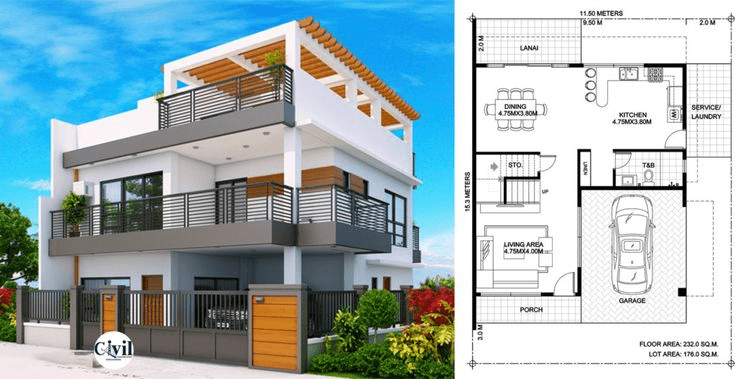
2 Storey House Design With Roof Deck Floor Plan: What It Means
A 2 storey house design with roof deck floor plan is a home with two main interior levels and an accessible deck built on the roof, often above the second floor. The roof deck functions as an additional living area—similar to a terrace or balcony, but larger and more flexible.
Read too: Hail Damage Roof Repair: Essential Guide to Restoring Your Home’s Protection
Why This Design Is Trending
- Maximizes limited lot space
- Adds outdoor living without a backyard
- Enhances views, airflow, and natural light
- Increases property value
This layout is especially popular in urban areas and warm climates.
Why Homeowners Choose a Roof Deck
Roof decks aren’t just stylish—they solve real problems.
Key Benefits
- Extra entertainment space
- Private outdoor area away from street noise
- Ideal for gatherings, dining, or relaxing
- Better use of vertical space
Design Insight: A roof deck can add functional square footage without increasing the building footprint, which is crucial for small lots.
Typical Layout of a 2 Storey House With Roof Deck
Ground Floor (First Storey)
The first floor usually focuses on public and service areas.
Common spaces include:
- Living room
- Dining area
- Kitchen
- Guest bedroom or home office
- Bathroom
- Storage or utility space
Open-plan layouts are common to improve flow and natural light.
Second Floor (Private Living Area)
The second floor is typically reserved for private spaces.
Common rooms include:
- Master bedroom with ensuite
- Secondary bedrooms
- Shared bathroom
- Family lounge or study nook
Placing bedrooms on the second floor improves privacy and security.
Roof Deck Level
The roof deck is the standout feature.
Typical roof deck uses:
- Outdoor dining area
- Lounge or seating zone
- Small garden or planters
- BBQ or outdoor kitchen
- Yoga or relaxation space
Planning Tip: Even a modest roof deck (20–30 m²) can feel spacious when designed efficiently.
Popular Floor Plan Configurations
Compact Urban Floor Plan
- Narrow lot design
- Open-plan ground floor
- Bedrooms stacked above
- Roof deck accessed via stairwell
Perfect for city living and small land parcels.
Family-Oriented Floor Plan
- Multiple bedrooms on second floor
- Larger kitchen and dining area
- Roof deck for family gatherings
Ideal for growing families who want flexible space.
Luxury Modern Floor Plan
- Master suite with deck access
- Glass doors and railings
- Rooftop lounge with premium finishes
Designed for homeowners who want style and exclusivity.
Advantages of a 2 Storey House With Roof Deck
Pros
- ✔ Maximizes usable space
- ✔ Improves ventilation and natural light
- ✔ Enhances modern architectural appeal
- ✔ Adds a private outdoor area
- ✔ Increases resale value
Cons
- ✖ Higher construction cost
- ✖ Requires structural reinforcement
- ✖ Additional waterproofing needed
Understanding both sides helps you plan realistically.
How Much Does It Cost to Build?
Costs vary by region, size, and materials.
Main Cost Factors
- Structural support for roof deck
- Waterproofing systems
- Railings and safety features
- Access stairs or doors
General Cost Range
- Basic roof deck addition: 10–20% added to total build cost
- Premium roof deck with finishes: 20–30% added
Budget Tip: A simple, uncovered roof deck costs far less than one with pergolas, kitchens, or heavy landscaping.
Structural and Safety Considerations
Roof decks require careful engineering.
Key Requirements
- Reinforced concrete or steel framing
- Proper drainage slope
- Waterproof membranes
- Guardrails or parapet walls
Ignoring these can lead to leaks or structural issues.
Waterproofing: The Most Critical Element
Waterproofing is non-negotiable.
Best Practices
- Use multi-layer waterproof systems
- Install proper drainage outlets
- Schedule regular inspections
Industry Insight: Most roof deck problems are caused by poor waterproofing, not design flaws.
Climate and Roof Deck Design
Hot Climates
- Shade structures or pergolas
- Light-colored surfaces
- Heat-resistant materials
Rainy Climates
- Covered seating areas
- High-quality drainage
- Slip-resistant flooring
Windy Areas
- Solid railings or wind screens
- Secure furniture
Designing for climate ensures year-round usability.
Materials Commonly Used
Flooring Options
- Outdoor tiles
- Composite decking
- Treated wood
- Concrete finishes
Railings
- Glass (modern look)
- Metal (durable)
- Concrete parapets
Choose materials based on maintenance and exposure.
Energy Efficiency Benefits
A well-designed roof deck can help with:
- Heat reduction through shading
- Improved airflow
- Lower cooling loads
Combined with insulation, it can improve overall comfort.
Step-by-Step: How to Plan a 2 Storey House With Roof Deck
Step 1: Assess Your Lot
Check size, zoning, and height limits.
Step 2: Define Your Needs
Entertainment, relaxation, or both?
Step 3: Plan Access
Internal stairs or external access?
Step 4: Budget for Reinforcement
Roof decks need stronger structures.
Step 5: Work With Professionals
Architect and structural engineer involvement is essential.
Common Mistakes to Avoid
- Skipping waterproofing details
- Underestimating structural load
- Poor drainage planning
- Designing unused deck space
Avoiding these mistakes saves time and money.
Does a Roof Deck Increase Property Value?
In most cases, yes.
Why Buyers Love Roof Decks
- Unique feature
- Private outdoor space
- Urban lifestyle appeal
Homes with roof decks often stand out in listings and photos.
Is a Roof Deck Better Than a Balcony?
| Feature | Roof Deck | Balcony |
|---|---|---|
| Size | Large | Small |
| Privacy | High | Moderate |
| Cost | Higher | Lower |
| Flexibility | Very high | Limited |
If space allows, roof decks offer more versatility.
Legal and Code Considerations
Always check:
- Local height restrictions
- Setback requirements
- Safety railing codes
- Load-bearing regulations
For general background on flat roofs and roof terraces, see this neutral reference on Wikipedia:
https://en.wikipedia.org/wiki/Flat_roof
FAQ – 2 Storey House Design With Roof Deck Floor Plan
Q1: Is a roof deck safe for a two-storey house?
Yes, when properly engineered and waterproofed.
Q2: Can a roof deck be added later?
Sometimes, but it’s easier and cheaper when planned from the start.
Q3: How big should a roof deck be?
Even 20–30 m² can be functional and comfortable.
Q4: Does a roof deck require maintenance?
Yes. Regular inspections and cleaning are essential.
Q5: Is a roof deck suitable for small lots?
Absolutely. It’s one of the best solutions for limited land.
Conclusion
A 2 Storey House Design With Roof Deck Floor Plan is a smart, future-ready solution for homeowners who want more space, better views, and modern living without expanding their footprint. With thoughtful planning, proper waterproofing, and smart layout choices, a roof deck can become one of the most valuable and enjoyable parts of your home. If this guide helped you understand your options, share it on social media so others can explore the benefits of vertical living with a roof deck too.

Leave a Reply