If you’ve ever seen photos of charming cabins in Norway with thick green grass growing on top, you’ve probably wondered: Why Do Norwegian Houses Have Grass On The Roof? Is it purely decorative, or does it serve a real purpose?
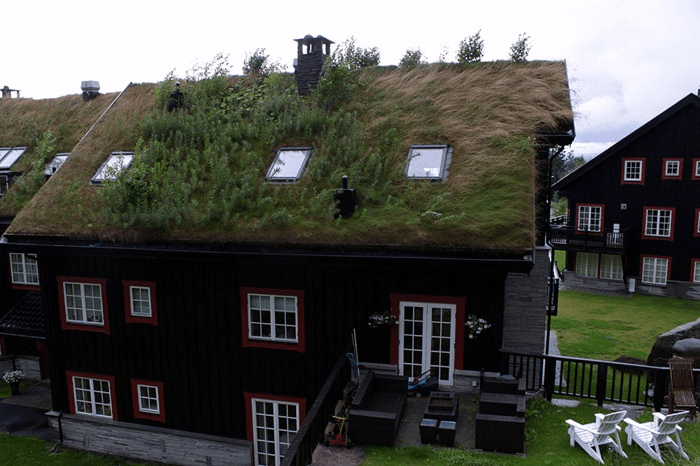
The answer combines history, survival, insulation science, and modern sustainability. What looks like a fairy-tale design is actually one of the most practical roofing systems ever developed for cold climates.
Read too: Hail Damage Roof Repair: Essential Guide to Restoring Your Home’s Protection
Let’s explore why Norway’s grass-covered roofs are both traditional and surprisingly forward-thinking.
Why Do Norwegian Houses Have Grass On The Roof?
The primary reason is insulation.
Norwegian grass roofs—also called turf roofs—were designed to:
- Retain heat during harsh winters
- Protect wooden structures
- Provide waterproof layering
- Use locally available materials
Long before modern insulation existed, turf roofs acted as a natural thermal barrier against freezing Scandinavian temperatures.
Today, these roofs are both a cultural symbol and an eco-friendly building solution.
How Did Grass Roofs Originate in Norway?
Grass roofs date back over 1,000 years, to the Viking Age.
Traditional Norwegian homes were built using:
- Timber log frames
- Birch bark waterproofing layers
- Thick sod or turf covering
The birch bark acted as a natural water barrier, while the turf provided weight and insulation.
For historical context, turf roofing is part of what is known as green roofing systems:
https://en.wikipedia.org/wiki/Green_roof
Unlike modern green roofs installed for environmental reasons, Norway’s turf roofs began as a survival necessity.
How Do Grass Roofs Keep Homes Warm?
The key principle is thermal mass and insulation.
Turf roofs typically consist of:
- Wooden roof structure
- Waterproof birch bark layer
- Soil layer (3–6 inches thick)
- Grass vegetation
Why This Works
- Soil traps air pockets, reducing heat transfer.
- Grass prevents soil erosion.
- The combined layers act as natural insulation.
In cold climates where winter temperatures drop below 0°F (-18°C), insulation is critical.
Traditional turf roofs provided remarkable warmth before fiberglass insulation was invented.
Do Grass Roofs Help With Cooling in Summer?
Yes — and this may surprise you.
While Norway is cold most of the year, summer temperatures can reach 70–80°F.
Grass roofs:
- Absorb sunlight
- Reduce heat transfer into the building
- Evaporate moisture (cooling effect)
This creates a natural temperature regulation system year-round.
Modern green roofs in urban areas use the same principle to reduce heat island effects.
Are Norwegian Grass Roofs Waterproof?
Yes — but not because of the grass.
The waterproofing layer is critical.
Traditional method:
- Several layers of birch bark
- Overlapping sheets
- Secured under turf weight
Birch bark contains natural oils that resist water penetration.
The grass layer protects the bark from UV damage and weathering.
Without proper waterproofing, grass alone would cause leaks.
Why Are Grass Roofs Still Popular in Norway Today?
Grass roofs are no longer a survival necessity—but they remain culturally significant.
Reasons they continue today:
- Heritage preservation
- Eco-friendly design
- Tourism appeal
- Aesthetic integration with landscape
In rural Norway, cabins and mountain lodges often use turf roofs to blend into natural surroundings.
It’s common to see small grazing animals like goats climbing these roofs—something that has become iconic in travel photography.
Environmental Benefits of Grass Roofs
Modern sustainability has revived interest in green roofing worldwide.
Environmental Advantages
✔ Natural insulation
✔ Reduced energy consumption
✔ Improved air quality
✔ Rainwater absorption
✔ Biodiversity support
According to environmental building studies, green roofs can:
- Reduce heating and cooling energy by up to 25%
- Absorb up to 70% of rainfall, reducing runoff
Although Norway’s turf roofs were traditional, they align perfectly with today’s green building standards.
Are Grass Roofs Heavy?
Yes — and that’s intentional.
A turf roof can weigh:
- 15–25 pounds per square foot (dry)
- More when saturated with water
Because of this, structural support must be strong.
Traditional log cabins were built with thick beams to handle this weight.
Modern green roofs require engineered structural calculations.
Pros and Cons of Norwegian Grass Roofs
Advantages
✔ Excellent insulation
✔ Eco-friendly
✔ Natural aesthetic
✔ Long lifespan (if maintained)
✔ Soundproofing benefits
Disadvantages
✖ Heavy weight
✖ Requires maintenance
✖ Higher installation complexity
✖ Not suitable for all climates
How Are Traditional Turf Roofs Built? (Step-by-Step Overview)
Here’s a simplified breakdown of the traditional Norwegian method:
Step 1: Install Timber Roof Frame
Strong beams create structural support.
Step 2: Lay Wooden Planks
Form the roof deck.
Step 3: Add Birch Bark Layers
At least 6 overlapping layers for waterproofing.
Step 4: Add Soil Base
Approximately 3–6 inches of soil.
Step 5: Plant Grass or Sod
Sod is often pre-grown and installed in sections.
Step 6: Maintain Moisture
Water lightly during first few weeks to establish root system.
The grass roots bind soil together, preventing erosion.
Why Don’t All Cold Countries Use Grass Roofs?
Several reasons:
- Structural weight concerns
- Modern insulation alternatives
- Labor-intensive installation
- Building code restrictions
In many countries, asphalt shingles and metal roofing replaced turf because they are lighter and easier to install.
However, modern green roof systems are growing in popularity again.
Are Norwegian Grass Roofs the Same as Modern Green Roofs?
Not exactly.
| Feature | Traditional Turf Roof | Modern Green Roof |
|---|---|---|
| Waterproofing | Birch bark | Synthetic membranes |
| Soil Depth | 3–6 inches | Varies (extensive or intensive) |
| Purpose | Insulation | Sustainability & insulation |
| Structural Engineering | Timber beams | Engineered systems |
The core concept is similar, but modern systems use advanced materials.
Do Grass Roofs Improve Energy Efficiency?
Yes.
The insulation value of soil combined with vegetation:
- Reduces heat loss in winter
- Limits heat gain in summer
- Stabilizes indoor temperatures
Studies on green roofing show consistent reductions in energy usage for heating and cooling.
In Norway’s cold climate, this was historically essential.
Are Grass Roofs Expensive?
Modern green roof systems can cost:
- $10–$25 per square foot installed
Traditional turf roofs may cost less in rural Norway due to local materials.
However, structural reinforcement can increase overall construction cost.
FAQ Section
1. Why do Norwegian houses have grass on the roof?
To provide natural insulation, waterproof protection, and cultural architectural identity dating back to Viking times.
2. Are grass roofs waterproof?
Yes, when installed with proper waterproofing layers like birch bark or modern membranes.
3. Do grass roofs reduce heating costs?
Yes. Soil and vegetation provide thermal insulation that helps retain indoor heat.
4. Are turf roofs heavy?
Yes. They require strong structural framing to support the weight of soil and vegetation.
5. Do people still build grass roofs in Norway today?
Yes, especially for cabins, heritage homes, and eco-friendly construction projects.
6. Can grass roofs work in the United States?
They can, but structural design, climate, and building codes must be considered.
Conclusion
So, Why Do Norwegian Houses Have Grass On The Roof?
It began as a practical solution for surviving harsh winters. Over time, it became a symbol of Scandinavian architectural identity—and today, it represents sustainability and smart design.
Grass roofs:
- Provide powerful insulation
- Protect structures naturally
- Blend beautifully with landscapes
- Reduce environmental impact
What once was a survival technique is now admired worldwide as eco-conscious architecture.
If you found this guide helpful, share it on social media to help others discover the fascinating history and science behind Norway’s iconic grass roofs.
Leave a Reply