If you’ve ever driven through the Southwest or looked at homes in warmer states, you may have wondered: Why Do Some Houses Have AC On The Roof? It might seem unusual if you’re used to seeing air conditioning units placed beside the house.
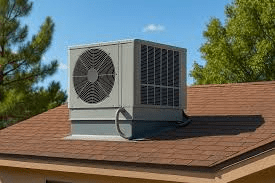
The truth is, rooftop air conditioning systems are common in certain climates and home designs. In this detailed guide, we’ll explain why some homes use roof-mounted AC units, how they work, the pros and cons, and whether this setup might make sense for your property.
Read too: How Long Do Standing Seam Metal Roofs Last? A Comprehensive Guide to Durability and Longevity
Why Do Some Houses Have AC On The Roof?
The primary reason Why Do Some Houses Have AC On The Roof comes down to climate, architecture, and space efficiency.
Rooftop AC units are often part of a packaged HVAC system, meaning the compressor, condenser, and air handler are combined into one outdoor unit placed on the roof.
This design is especially common in:
- Southwestern U.S. states (Arizona, Nevada, California)
- Urban areas with limited yard space
- Homes with flat roofs
- Commercial buildings
For background on how air conditioning systems function, see:
https://en.wikipedia.org/wiki/Air_conditioning
Understanding system design helps explain why rooftop placement works in certain regions.
What Is a Rooftop AC Unit?
A rooftop AC system is typically a packaged HVAC unit that contains:
- Compressor
- Condenser coil
- Evaporator coil
- Air handler
Unlike split systems (where parts are indoors and outdoors), rooftop units combine everything in one cabinet.
This simplifies installation in certain home designs.
Why Are Rooftop AC Units Common in the Southwest?
Climate plays a major role.
1. Flat Roof Architecture
Many homes in desert climates have flat or low-slope roofs.
This design makes rooftop installation practical and accessible.
2. Space-Saving Design
In densely built neighborhoods, yard space is limited.
Placing the AC unit on the roof:
- Frees up ground space
- Reduces noise at ground level
- Protects the unit from vandalism
3. Hot, Dry Climate Advantage
In hot, dry regions:
- Heat rises
- Roof placement allows better airflow
- Equipment stays away from dust buildup near ground level
Rooftop systems also work well with evaporative cooling systems (swamp coolers), which are common in arid climates.
Are Rooftop AC Units More Efficient?
Efficiency depends more on system design than location.
However, rooftop units can offer advantages:
Benefits:
- Shorter duct runs in single-story homes
- Centralized airflow distribution
- Reduced ground-level heat recycling
Potential Drawbacks:
- Increased sun exposure
- Harder access for maintenance
- Possible roof structural stress
Modern units are built to handle outdoor exposure.
Pros vs Cons of AC Units on the Roof
Advantages
- Saves yard space
- Reduced ground noise
- Cleaner aesthetics
- Better protection from debris
- Easier for duct routing in some layouts
Disadvantages
- Harder maintenance access
- Potential roof leaks if improperly installed
- Structural reinforcement may be required
- Higher installation cost in some cases
Is It Safe to Put an AC Unit on the Roof?
Yes—when installed correctly.
Professional installers ensure:
- Proper weight distribution
- Structural support
- Weatherproof flashing
- Secure mounting
Roof units typically weigh between:
- 150 to 400 pounds depending on size
Homes must be engineered to support this load.
How Are Rooftop Units Installed? (Step-by-Step Overview)
Professional installation typically follows these steps:
Step 1: Structural Assessment
- Inspect roof framing
- Confirm weight-bearing capacity
Step 2: Install Roof Curb
A roof curb is a raised platform that:
- Supports the unit
- Prevents water intrusion
Step 3: Seal and Flashing
Waterproof sealing is critical.
Improper flashing can lead to leaks.
Step 4: Connect Ductwork
Supply and return ducts connect directly below the unit.
Step 5: Electrical & Refrigerant Connections
Licensed HVAC professionals handle electrical wiring and refrigerant charging.
Installation typically takes 4–8 hours.
Do Rooftop Units Last as Long as Ground Units?
Average lifespan:
- 12–20 years
Factors affecting lifespan:
- Sun exposure
- Maintenance frequency
- Climate severity
- Installation quality
Routine servicing extends longevity.
Are Rooftop Units Noisier?
Surprisingly, many homeowners report less noticeable noise.
Because the unit is:
- Elevated
- Further from living spaces
Sound may actually be reduced indoors.
What About Maintenance?
Rooftop units require:
- Annual inspections
- Coil cleaning
- Filter changes
- Electrical checks
Access may require:
- Ladder
- Roof safety measures
Some homeowners prefer professional servicing due to roof access risk.
Do Rooftop AC Units Increase Home Value?
In certain markets, yes.
Especially in:
- Desert climates
- Urban environments
- Modern flat-roof designs
Buyers often expect rooftop systems in those areas.
Real-World Example
In Phoenix, Arizona, over 60% of single-family homes feature rooftop packaged HVAC systems due to flat-roof construction and space efficiency.
Homeowners benefit from:
- Reduced yard clutter
- Simplified duct routing
- Cleaner exterior aesthetics
Regional design heavily influences HVAC placement.
Can You Move a Ground AC Unit to the Roof?
It’s possible—but expensive.
Requires:
- Structural modifications
- New ductwork
- Electrical relocation
- Roof reinforcement
Costs may exceed $5,000 depending on complexity.
Usually only done during major renovation.
Is a Rooftop AC Right for You?
Consider rooftop installation if:
- You have limited yard space
- Your home has a flat roof
- You’re building new construction
- You live in a hot, dry climate
Avoid rooftop placement if:
- Roof structure is weak
- Access is difficult
- You prefer easier maintenance
FAQ – Why Do Some Houses Have AC On The Roof?
1. Why are AC units on roofs in Arizona?
Flat roofs and desert climate make rooftop installation practical and common.
2. Are rooftop AC units more expensive?
Installation can be slightly higher due to structural support requirements.
3. Do rooftop AC units leak?
Only if improperly sealed. Professional flashing prevents leaks.
4. Are they harder to repair?
Yes, roof access may complicate servicing.
5. Do rooftop units cool better?
Cooling performance depends on system size and design—not location alone.
6. Can heavy storms damage rooftop AC units?
They are built to withstand weather, but extreme storms can cause damage.
Conclusion
So, Why Do Some Houses Have AC On The Roof? The answer comes down to architecture, climate, and space efficiency.
Rooftop AC systems:
- Save yard space
- Work well in flat-roof homes
- Fit hot, dry climates
- Offer centralized installation
They aren’t better or worse—just different solutions for specific environments.
If this guide helped you understand rooftop AC systems, consider sharing it with homeowners curious about HVAC placement and home design choices.
Leave a Reply