On extremely hot days, many homeowners ask: Does Putting A Sprinkler On The Roof Cool House? The idea sounds logical—spray water on a scorching roof to lower its temperature and cool the rooms below.
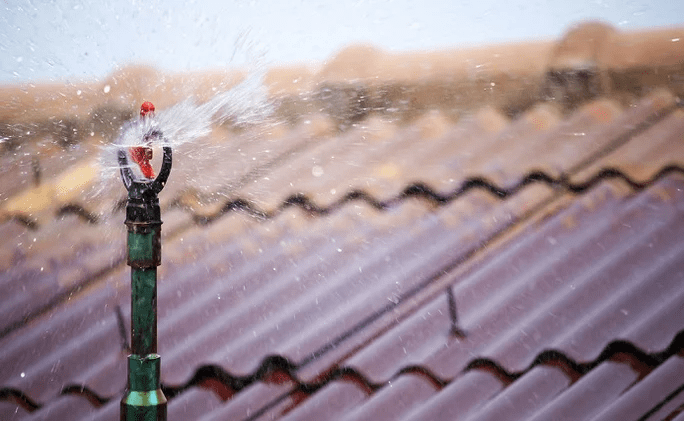
Surprisingly, this method can reduce roof surface heat for a short time. But the full story involves physics, moisture risks, and whether the cooling benefit is worth the water use and potential roof damage. Let’s break it down clearly.
Does Putting A Sprinkler On The Roof Cool House — Scientifically?
Yes, temporarily. The effect is called evaporative cooling.
When water evaporates, it absorbs heat from the surface. On a 140–170°F roof, evaporation can drop shingle temperature by 20–40°F while water is present.
This can slightly reduce attic heat and indoor temperature for a short window.
Read too: Hail Damage Roof Repair: Essential Guide to Restoring Your Home’s Protection
For background on evaporative cooling, see Wikipedia: Evaporative cooler:
https://en.wikipedia.org/wiki/Evaporative_cooler
How Much Cooling Actually Reaches Your Living Space?
Roof temperature ≠ room temperature.
| Area | Typical Temp (Hot Day) | With Sprinkler |
|---|---|---|
| Roof shingles | 150°F | 110–120°F |
| Attic air | 130°F | 115–120°F |
| Indoor room | 82°F | 79–80°F |
Result: You may feel a 2–3°F indoor drop at best, and only while water runs.
Why This Works Better in Dry Climates
Evaporation is strongest when air is dry.
- Arizona, Nevada, Texas (dry heat) → noticeable effect
- Florida, Louisiana (humid) → minimal effect
High humidity slows evaporation, reducing cooling.
The Hidden Risks Most People Don’t Consider
While the idea works physically, roofers often discourage it.
1) Moisture Intrusion
Constant soaking can force water under shingles and flashing.
2) Shingle Aging
Thermal shock (very hot → suddenly wet) stresses asphalt shingles.
3) Mold & Rot in Attic
If moisture seeps through decking, mold can form in insulation.
4) Massive Water Use
A standard sprinkler uses 3–6 gallons per minute.
Running 1 hour = 180–360 gallons.
Real-World Example
A homeowner in Phoenix tried roof sprinkling every afternoon. Cooling worked, but after one summer:
- Shingles curled prematurely
- Roof decking showed moisture stains
- Attic developed mildew odor
The short-term cooling led to long-term repair costs.
Better Alternatives That Work All Day (Without Risk)
Improve Attic Ventilation
- Ridge vent + soffit vent airflow
- Drops attic temps by 20–30°F continuously
Install Radiant Barrier
Reflects up to 97% of radiant heat from entering attic.
Use Light-Colored / Reflective Shingles
Reduces heat absorption dramatically.
Add Insulation
Prevents attic heat from reaching rooms.
If You Still Want to Try It (Safer Method)
Only as a temporary emergency measure during extreme heat.
Steps:
- Use fine mist, not heavy spray.
- Run for 10–15 minutes max.
- Do it during peak sun (2–4 PM).
- Ensure gutters are clear for drainage.
- Avoid doing this daily.
This reduces risk of water intrusion.
Pros vs Cons of Roof Sprinkling
| Pros | Cons |
|---|---|
| Immediate roof temp drop | High water usage |
| Slight indoor cooling | Roof lifespan reduction |
| Simple setup | Risk of leaks/mold |
| Works in dry heat | Ineffective in humidity |
Why Attic Heat Is the Real Problem
Most heat entering your home comes from the attic, not directly through shingles.
Fixing airflow and insulation solves the root issue, not the symptom.
FAQ — Does Putting A Sprinkler On The Roof Cool House?
Q1: Will this lower my AC bill?
Only slightly and temporarily. Ventilation upgrades save more long term.
Q2: Is this safe for metal roofs?
Safer than shingles, but still wastes water.
Q3: Can this cause roof leaks?
Yes, especially around flashing and vents.
Q4: How long does the cooling last?
Only while water is evaporating (minutes).
Q5: Is this recommended by roofers?
Generally no, except as rare temporary relief.
Q6: What’s the best permanent solution?
Improve attic ventilation and insulation.
Conclusion
So, Does Putting A Sprinkler On The Roof Cool House? Yes—but only briefly, and with real risks to your roof and wallet. The science works, but the side effects often outweigh the benefit.
For lasting comfort, focus on ventilation, insulation, and reflective roofing. If this guide helped you understand the trade-offs, share it on social media to help others stay cool the smart way.


Leave a Reply