One of the most important steps when planning a roof replacement is figuring out how many roofing squares you’ll need. A roofing square is a standard measurement in the construction industry that equals 100 square feet of roofing material. Understanding this measurement is crucial when estimating material costs, labor requirements, and overall project planning.
Many homeowners ask “how to figure how many squares to roof a house” because they want accurate numbers before hiring contractors or purchasing shingles. Getting this calculation wrong can lead to overspending on materials or, worse, running out of shingles mid-project.
In this article, we’ll walk you through everything you need to know about calculating roofing squares. From measuring your roof’s surface area to adjusting for pitch and waste, this guide ensures you’ll be confident the next time you’re planning a roofing job.
Read too: Hail Damage Roof Repair: Essential Guide to Restoring Your Home’s Protection
What Is a Roofing Square?
Before learning how to figure how many squares to roof a house, you need to know what a roofing square means:
- 1 roofing square = 100 square feet of roof area
- Roofing materials like shingles, underlayment, and felt are sold based on squares.
- Example: If your roof is 2,000 square feet, you’ll need 20 squares of roofing materials.
This standard measurement simplifies ordering and installation across the roofing industry.
Why Calculating Roofing Squares Matters
Understanding how to figure how many squares to roof a house helps with:
- Budgeting – Materials make up a large portion of roof replacement costs.
- Reducing Waste – Too much leftover material adds unnecessary expense.
- Avoiding Shortages – Running out of shingles mid-project causes delays.
- Hiring Contractors – Contractors usually provide estimates in roofing squares.
Tools You’ll Need to Calculate Roofing Squares
Before you begin measuring, gather these tools:
- Tape measure (preferably 50-100 feet)
- Ladder and safety gear
- Calculator or smartphone app
- Notebook and pen for recording measurements
- Roof pitch gauge (optional but helpful)
Step-by-Step Guide: How To Figure How Many Squares To Roof A House
Step 1: Measure the Base of the Roof
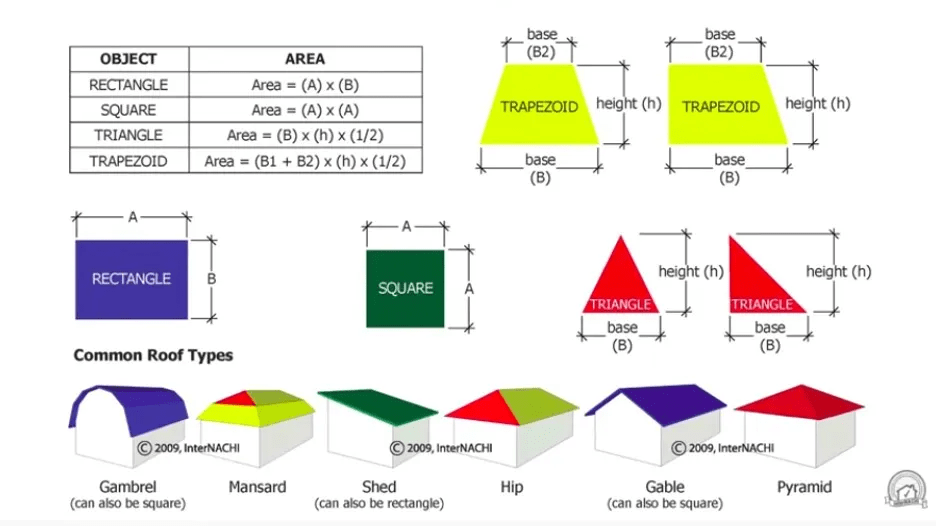
Measure the length and width of your house. Multiply them to get the area of each roof section.
Example: A section that’s 40 feet by 25 feet = 1,000 square feet.
Step 2: Break the Roof Into Sections
If your roof has multiple slopes, dormers, or gables, measure each section separately. Add all sections together for the total surface area.
Step 3: Adjust for Roof Pitch
Roof pitch (slope) significantly impacts the actual surface area. A steeper roof has more square footage than a flat one.
Common pitch multipliers:
- 3/12 pitch = 1.03 multiplier
- 6/12 pitch = 1.12 multiplier
- 9/12 pitch = 1.25 multiplier
- 12/12 pitch = 1.41 multiplier
Multiply the base area by the pitch multiplier to get the true roof area.
Example: Base area 1,000 sq. ft × pitch multiplier 1.25 = 1,250 sq. ft.
Step 4: Convert to Roofing Squares
Divide the total roof area by 100 to get the number of roofing squares.
Example: 1,250 sq. ft ÷ 100 = 12.5 squares.
Step 5: Add Extra for Waste
Roofing projects typically require an additional 10–15% of materials to account for cuts, overlaps, and mistakes.
Example: 12.5 squares × 1.10 = 13.75 squares. Round up to 14 squares.
Example Calculation
Let’s put it all together with a sample house:
- House length: 50 ft
- House width: 30 ft
- Base area: 50 × 30 = 1,500 sq. ft
- Roof pitch: 6/12 → multiplier 1.12
- Adjusted area: 1,500 × 1.12 = 1,680 sq. ft
- Roofing squares: 1,680 ÷ 100 = 16.8
- With 10% waste: 16.8 × 1.10 = 18.5 → 19 squares needed
Factors That Affect Roofing Square Calculation
When figuring out how to figure how many squares to roof a house, keep these in mind:
- Roof Complexity – Valleys, hips, and dormers increase square footage.
- Roof Pitch – Steeper roofs require more material.
- Material Type – Some shingles overlap more than others.
- Waste Factor – Complicated roofs require more cutting, leading to more waste.
Mistakes to Avoid When Calculating Roofing Squares
- Ignoring roof pitch – Leads to underestimating material.
- Not adding waste percentage – You’ll likely run short of shingles.
- Measuring only one side of the roof – Always measure every slope.
- Rounding down – Always round up to avoid shortages.
Professional vs DIY Measurements
- DIY Measurement: Great for estimates but can be tricky for steep or complex roofs.
- Professional Measurement: Roofing contractors use aerial measurements, drones, or advanced software for precision.
If safety is a concern, hiring a professional for accurate measurements is recommended.
FAQs About Roofing Squares
Q: How many bundles of shingles are in one roofing square?
Most shingles come in 3 bundles per square, though some brands use 4.
Q: Can I measure my roof from the ground?
Yes. By measuring your home’s footprint and multiplying by the pitch factor, you can calculate roof area without climbing.
Q: What if my roof has skylights or chimneys?
Subtract their square footage from the total roof area since they don’t require shingles.
Q: Is waste always 10–15%?
For simple roofs, 10% is enough. For complex roofs, 15–20% may be safer.
Conclusion
Learning how to figure how many squares to roof a house is essential for any homeowner preparing for a roofing project. By breaking the roof into sections, accounting for pitch, and adding extra for waste, you can get a reliable estimate of how much material you’ll need.
While professionals can provide precise measurements, understanding the process yourself ensures you can double-check estimates, budget wisely, and avoid surprises during installation. With careful planning, you’ll know exactly how many roofing squares are required to protect your home for years to come.
Leave a Reply