If you’ve ever wondered, “Whats the pitch of most house roofs in Phoenix AZ?”, you’re not alone. Roof pitch affects everything from water drainage to solar panel efficiency and overall curb appeal. Understanding the typical roof slope in Phoenix helps homeowners make informed choices about roofing materials, installation, and maintenance.
What Is Roof Pitch?
Roof pitch refers to the steepness or slope of a roof, usually measured as the ratio of vertical rise to horizontal run. It’s expressed in inches of rise per 12 inches of run. For example:
- A 4:12 pitch rises 4 inches for every 12 inches horizontally.
- A 6:12 pitch rises 6 inches per 12 inches run.
Read too: Hail Damage Roof Repair: Essential Guide to Restoring Your Home’s Protection
Roof pitch is crucial for:
- Water drainage: Steeper roofs shed rainwater quickly.
- Durability: Affects material wear and longevity.
- Energy efficiency: Influences attic ventilation and solar panel placement.
According to Wikipedia Roofing, roof slope is a key factor in residential construction and local building codes often dictate minimum pitch requirements for durability and safety.
Typical Roof Pitch In Phoenix AZ
Phoenix, Arizona has a hot, arid climate with infrequent but intense rainstorms. Local roof design is influenced by:
- Heat and Sun Exposure: Flatter roofs reduce solar gain and are easier to maintain in hot weather.
- Rainwater Drainage: Though rain is limited, proper drainage prevents water pooling and damage.
- Architectural Style: Southwestern and Mediterranean-style homes favor lower pitches.
Average Roof Pitch in Phoenix AZ:
| Roof Type | Common Pitch | Notes |
|---|---|---|
| Spanish Tile Roofs | 3:12 – 5:12 | Low slope, classic southwestern style |
| Asphalt Shingle Roofs | 4:12 – 6:12 | Standard for most residential homes |
| Modern Flat Roofs | 1:12 – 2:12 | Minimal slope, often with drainage systems |
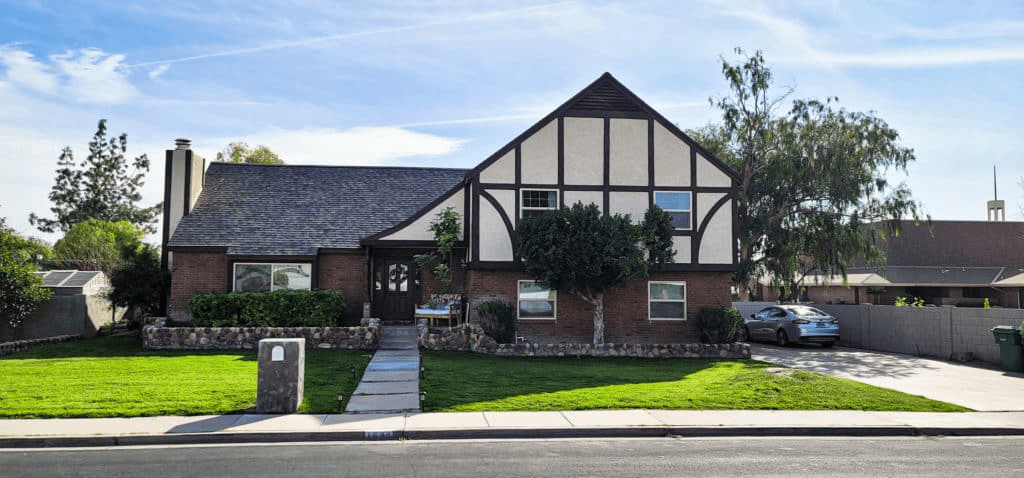
Most residential homes in Phoenix have a 4:12 to 6:12 pitch, balancing aesthetics, drainage, and heat management.
Factors Influencing Roof Pitch In Phoenix
- Climate Considerations
- Lower pitches reduce sun exposure and heat buildup.
- Steeper roofs can handle rare heavy rain more effectively.
- Material Selection
- Clay or concrete tiles require minimum 3:12 pitch.
- Asphalt shingles perform well on slopes between 4:12 and 6:12.
- Architectural Style
- Mediterranean-style homes favor lower slopes (3:12–4:12).
- Contemporary homes often have moderate slopes (5:12–6:12).
- Local Building Codes
- The City of Phoenix requires a minimum slope for certain roofing materials to ensure durability and proper water runoff.
Pros and Cons of Common Roof Pitches
| Roof Pitch | Pros | Cons |
|---|---|---|
| 3:12 – 4:12 | Modern look, reduced solar exposure, less material cost | Limited water drainage, can trap debris |
| 4:12 – 6:12 | Standard in Phoenix, good drainage, easy installation | Moderate maintenance for tiles/shingles |
| 6:12+ | Excellent drainage, adds height and aesthetics | Higher cost, more materials, hotter in summer if not shaded |
Choosing the right pitch depends on your home’s style, climate adaptation, and maintenance willingness.
How To Determine Roof Pitch
- Measure the Rise and Run
- Use a ladder and level to measure vertical rise over 12 inches horizontal run.
- Use a Pitch Calculator
- Online tools convert rise and run to degrees or ratio.
- Consult Your Builder or Roof Plans
- Most residential plans in Phoenix specify roof pitch according to building codes and architectural style.
- Visual Estimation
- Low slope: 1:12–3:12
- Moderate slope: 4:12–6:12
- Steep slope: 7:12+
Step-By-Step Guide For Adjusting Roof Pitch
Adjusting an existing roof slope is a major construction task, but here’s a simplified guide:
- Consult a Structural Engineer
- Ensure walls can support new trusses or rafters.
- Select Appropriate Materials
- Use tiles or shingles compatible with the new slope.
- Install New Trusses or Rafters
- Standard spacing is 24 inches on center, ensure ICC code compliance.
- Add Sheathing and Underlayment
- Plywood or OSB sheathing, then roofing underlayment for waterproofing.
- Install Roof Covering
- Shingles, tiles, or other materials according to manufacturer instructions.
Always check local Phoenix building codes before modifying roof pitch to ensure safety and compliance.
FAQ
Q1: Why are most roofs in Phoenix low to moderate pitch?
A: Hot climate and architectural style favor lower slopes, which reduce solar heat gain while still allowing water drainage.
Q2: Can I install solar panels on a 3:12 or 4:12 roof?
A: Yes, but panel efficiency may be slightly lower than on steeper roofs; adjustable mounts can optimize angle.
Q3: What is the standard pitch for clay tile roofs?
A: Minimum 3:12 pitch is recommended for proper water shedding and tile stability.
Q4: Does roof pitch affect maintenance?
A: Yes, flatter roofs require more frequent debris removal and inspections to prevent water pooling.
Q5: Are building codes in Phoenix strict about roof slope?
A: Yes, Phoenix codes mandate minimum slopes based on roofing material for safety and durability.
Q6: Can I change the pitch of an existing roof?
A: It’s possible but requires structural reinforcement, new trusses, and adherence to local building codes. Professional guidance is essential.
Conclusion
Understanding Whats the pitch of most house roofs in Phoenix AZ helps homeowners make informed decisions about roof installation, material choice, and maintenance. Most homes feature slopes between 4:12 and 6:12, balancing aesthetics, water drainage, and heat management. Proper roof pitch ensures long-lasting protection, energy efficiency, and compliance with local building codes. Share this guide with friends, family, or contractors planning a roofing project—it could save time, money, and headaches!
Leave a Reply