Introduction
When building or replacing a roof, decking (also known as sheathing) plays a crucial role in providing structural support and a solid base for roofing materials. However, many homeowners and builders wonder: Can you put a roof on a house without decking? While it is possible under certain conditions, skipping decking can lead to structural challenges, insulation issues, and reduced durability.
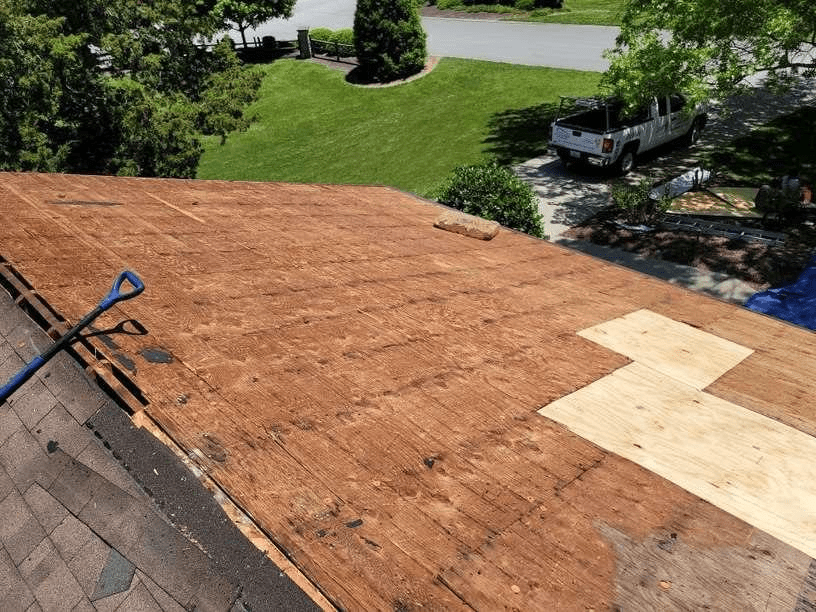
In this article, we will explore whether you can install a roof without decking, when it might be feasible, and the alternatives available. We will also discuss the benefits and drawbacks of omitting decking and how it impacts the longevity of your roof.
Read too: Hail Damage Roof Repair: Essential Guide to Restoring Your Home’s Protection
Can You Put A Roof On A House Without Decking?
The short answer is: Yes, in some cases, you can install a roof without decking, but it depends on the structure of the house and the type of roofing material used.
In traditional roofing systems, decking serves as a foundational layer that provides stability and a secure surface for shingles, metal panels, or other roofing materials. However, some older homes, especially those with wood slats or battens, do not have solid decking. Instead, they rely on spaced sheathing or direct installation onto rafters.
Let’s break down when you might be able to install a roof without decking and when it’s not recommended.
When Is It Possible to Install a Roof Without Decking?
There are a few specific situations where a roof can be installed without decking:
1. Metal Roofing on Battens
Some metal roofing systems can be installed over battens without the need for solid decking. Battens are narrow strips of wood or metal that provide a framework for securing the roof panels. This method is often used in agricultural, industrial, and some residential structures.
Advantages:
- Reduces material costs
- Improves ventilation
- Can work well for certain climates
Disadvantages:
- Less structural support
- May not be suitable for heavy roofing materials
- Limited insulation options
2. Older Homes with Spaced Sheathing
Before plywood or OSB (oriented strand board) became standard for decking, many homes used spaced sheathing (also called skip sheathing). This method consists of wooden planks placed with gaps between them, usually for wood shakes or shingles. If your home has spaced sheathing, you may not need to install new decking, especially if using similar roofing materials.
Advantages:
- Traditional aesthetic appeal
- Allows air circulation
- Works well with wood shakes
Disadvantages:
- Not ideal for asphalt shingles
- Reduced structural integrity compared to solid decking
- May not meet modern building codes
3. Pole Barns and Outbuildings
Some structures, such as barns, sheds, and outbuildings, are designed without traditional decking. Metal roofing is often installed directly onto purlins (horizontal beams) instead of a solid deck.
Advantages:
- Cost-effective
- Lightweight construction
- Suitable for non-residential buildings
Disadvantages:
- Not suitable for residential homes in extreme weather areas
- Reduced insulation and soundproofing
- Limited roofing material options
Why Decking Is Important for Most Homes
Although some roofs can be installed without decking, it is not the best choice for most residential properties. Here’s why:
1. Structural Stability
Decking provides a strong and stable base for roofing materials, reducing the risk of sagging, warping, or damage over time.
2. Better Insulation
A solid deck helps regulate indoor temperatures by providing an additional barrier against heat and cold. Without decking, your home may be less energy-efficient.
3. Enhanced Weather Protection
Decking helps protect against wind, rain, and snow by creating a sealed surface under the roofing material. Without it, water and air leaks are more likely.
4. Increased Roof Lifespan
Most modern roofing materials, including asphalt shingles, require solid decking for proper installation. Skipping this step may shorten the lifespan of your roof.
Alternatives to Traditional Decking
If you want to reduce the cost or weight of decking but still need structural support, here are some alternatives:
1. Metal Roofing on Purlins
For barns, sheds, or some residential homes, metal panels can be installed on purlins without solid decking. This works best in warm climates with minimal moisture concerns.
2. Structural Insulated Panels (SIPs)
SIPs combine insulation and sheathing in one panel, eliminating the need for traditional decking while maintaining structural integrity.
3. Synthetic Roofing Underlayment
Some modern roofing systems use high-strength synthetic underlayment that can serve as a temporary or partial replacement for decking, but it is not a complete substitute.
Can You Install Asphalt Shingles Without Decking?
No, asphalt shingles require solid decking for proper installation. Unlike wood shakes or metal panels, shingles need a flat, continuous surface to prevent curling, leaks, and wind damage. If your roof lacks decking, you may need to install plywood or OSB before applying shingles.
Building Code Considerations
Before deciding to install a roof without decking, check your local building codes. Many areas require decking to ensure safety and structural integrity. If your home does not have decking, you may need an inspection to determine whether alternative methods are allowed.
Conclusion: Should You Skip Decking?
Can you put a roof on a house without decking? In some cases, yes, but it’s generally not recommended for most residential homes. While certain structures, such as barns, older homes with spaced sheathing, and metal roofs on battens, may function without decking, most modern roofing systems require a solid base for proper installation.
Skipping decking can lead to insulation issues, structural instability, and potential roofing failures. If you’re considering this option, consult a roofing professional to determine whether your home’s structure can support a roof without decking.
In most cases, investing in proper decking will ensure a stronger, more durable, and weather-resistant roof.
Leave a Reply