Introduction
Many homeowners worry about storms—especially those with metal roofs. It’s a common concern: “Is lightning more prone to hit a metal roof house?”
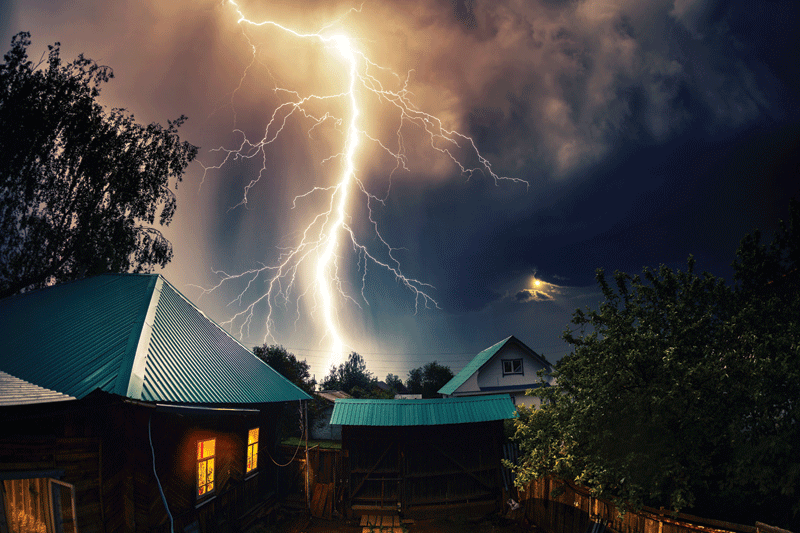
The short answer? No, metal roofs do not attract lightning more than any other type of roof. But understanding why that’s true—and how metal roofs actually improve safety—can help you make smarter choices when protecting your home.
In this guide, we’ll break down myths, real data, expert insights, and safety recommendations for living under a metal roof in lightning-prone areas.
Read too: Hail Damage Roof Repair: Essential Guide to Restoring Your Home’s Protection
Does Metal Really Attract Lightning?
Let’s address the big myth first: metal does not attract lightning.
Lightning is drawn to the highest point and the best path to the ground, not necessarily to metal.
That means trees, antennas, or tall buildings are much more likely to be struck than a low metal-roofed home.
According to the Metal Construction Association (MCA), “Metal roofing is no more likely to be struck by lightning than any other type of roofing material.”
In fact, location and height are the biggest factors—not the material itself.
| Factor | Effect on Lightning Risk |
|---|---|
| Building height | High – taller structures attract more lightning |
| Geographic region | High – areas like Florida or Texas have more lightning activity |
| Surroundings | High – isolated buildings on open land are more exposed |
| Roof material | Low – negligible difference among materials |
Why Metal Roofs Are Actually Safer During Lightning
It might sound surprising, but metal roofs can make your home safer during a storm. Here’s why:
- Non-Combustible Material
Unlike wood or asphalt shingles, metal doesn’t ignite. So even if lightning strikes, there’s no risk of your roof catching fire. - Better Energy Dispersion
Metal conducts electricity efficiently. That means if lightning does strike, the energy spreads out across the roof and safely into the ground (especially if the home is grounded). - Durability Against Impact
Metal roofs are engineered to withstand extreme weather—wind, hail, and even lightning damage better than traditional materials. - Long Lifespan & Safety Ratings
Most metal roofing systems are Class A fire-rated, the highest possible safety standard for homes in storm zones.
How Lightning Actually Chooses Where to Strike
Lightning seeks the easiest path to the ground. It travels through conductive materials (like metal or water), but it doesn’t choose metal over other objects.
Here’s how it works:
- Charge Builds in Clouds – Storm clouds accumulate electric charges.
- Opposite Charge on the Ground – The earth (and tall objects) develop opposite charges.
- Strike Path Forms – Lightning connects the two points via the shortest route.
- Energy Disperses – Conductive materials like metal safely channel the energy to the ground.
In short: metal conducts lightning—it doesn’t attract it.
For more details about the physics of lightning, see Wikipedia’s Lightning page.
Myths vs. Facts About Metal Roofs and Lightning
| Myth | Fact |
|---|---|
| Metal roofs attract lightning. | False. Height and location are the key factors. |
| Metal roofs cause fires if struck. | False. Metal is non-combustible and disperses energy. |
| Metal roofs need special lightning rods. | Sometimes. They’re useful for tall or isolated structures, but not always necessary. |
| Metal roofs are unsafe during storms. | False. They’re among the safest roofing materials available. |
Expert Insights on Metal Roof Safety
According to Dr. Mary Ann Cooper, a lightning expert with the National Lightning Safety Institute:
“Lightning strikes are determined by geography, elevation, and structure—not by material. Metal roofs can actually reduce damage when properly grounded.”
The Insurance Institute for Business & Home Safety (IBHS) also notes that homes with metal roofing systems have lower fire damage risk after lightning events compared to shingle-roofed homes.
How to Protect a Metal Roof House From Lightning
Even though metal roofs are safe, extra protection never hurts. Here’s what experts recommend:
1. Install a Grounding System
A proper lightning protection system (LPS) channels electrical energy safely into the ground.
Key components include:
- Air terminals (lightning rods)
- Conductors (metal cables)
- Ground rods (buried in soil)
2. Bond Metal Components Together
All metal parts—roof panels, gutters, antennas—should be electrically bonded. This helps distribute current evenly and prevents sparks.
3. Use Surge Protectors
Install whole-house surge protectors to protect electrical systems, appliances, and HVAC units during storms.
4. Regular Inspections
Check your roof for loose fasteners or ungrounded metal objects that could interfere with conductivity.
Comparing Roof Types: Metal vs. Shingle During Lightning
| Feature | Metal Roof | Asphalt Shingle Roof |
|---|---|---|
| Fire Resistance | Excellent (non-combustible) | Poor (flammable) |
| Conductivity | High – disperses charge safely | Low – absorbs heat/damage |
| Damage After Strike | Minimal | Often severe |
| Durability | 40–70 years | 15–30 years |
Verdict: Metal roofs are safer, longer-lasting, and more storm-resistant than shingle roofs—especially when properly grounded.
Real Case Example
In 2022, a homeowner in Tampa, Florida, experienced a lightning strike during a severe storm. Their metal roof absorbed and dispersed the strike with zero structural damage, while a neighboring shingle-roofed home caught fire.
Insurance adjusters later confirmed that the metal roofing system likely prevented a catastrophic fire, demonstrating real-world safety benefits.
FAQ Section
1. Is lightning more prone to hit a metal roof house?
No. Lightning is not attracted to metal; it’s attracted to the tallest object. A metal roof doesn’t increase your strike risk.
2. Will a metal roof cause more damage if struck?
No. Metal actually reduces damage risk by dispersing the lightning’s energy safely.
3. Do I need lightning rods on my metal roof?
Only in high-risk areas (like Florida, Texas, or the Midwest). A grounding system provides extra safety but isn’t always required.
4. Can metal roofs start fires from lightning?
No. Metal is non-combustible, meaning it won’t ignite even under extreme heat or electrical charge.
5. Are metal roofs covered by insurance for lightning?
Yes. Most homeowner insurance policies include coverage for lightning damage, regardless of roof material.
6. Is a metal roof worth it for storm-prone regions?
Absolutely. Metal roofs offer exceptional protection against lightning, wind, and hail while improving long-term property value.
Conclusion
So, is lightning more prone to hit a metal roof house?
The science and data say no. In fact, a metal roof can make your home safer during storms—offering better fire resistance, energy dispersion, and structural protection.
If you’re considering metal roofing, go for it confidently. Just ensure proper grounding and installation by certified professionals.
If you found this guide helpful, share it on social media to help others separate fact from fiction about metal roofing and lightning safety!
Leave a Reply