Sudden thunderstorms can be frightening—especially when a bolt of lightning hits close to home. Many homeowners search what happens when lightning strikes the roof of a house because they want to understand the risks, the type of damage it can cause, and what steps to take afterward. This guide explains everything clearly, from science to safety, so you can protect your home and your family.
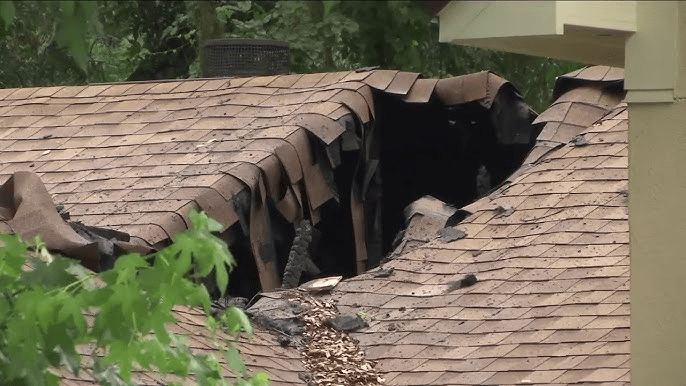
What Happens When Lightning Strikes the Roof of a House?
When lightning strikes the roof of a house, it delivers an extremely powerful electrical discharge—often exceeding 30,000 amps and temperatures hotter than the surface of the sun. This energy can cause fire, structural damage, power surges, electrical system failures, and roof material destruction.
Read too: Hail Damage Roof Repair: Essential Guide to Restoring Your Home’s Protection
Lightning follows the path of least resistance, entering the home through:
- Roofing materials
- Metal roofing
- Gutters
- Wiring
- Plumbing pipes
- Cable lines
- Chimneys
Let’s break down exactly what happens during and after a lightning strike.
1. Extreme Heat Can Ignite Roof Materials (Most Common Impact)
(H2 includes keyword contextually)
Lightning generates temperatures up to 50,000°F, which can instantly ignite roofing materials.
Roofing Materials Most At Risk
- Wood shingles or shakes
- Dry or aged asphalt shingles
- Debris buildup (pine needles, leaves)
Damage Signs
- Burn marks
- Smoke odor
- Charred shingles
- Melted roofing components
Why This Happens
Lightning carries so much energy that even a brief contact can cause combustion.
2. Lightning Can Damage Roof Structure and Decking
The explosive force of lightning can physically damage the roof.
Structural Issues May Include
- Splintered wood decking
- Cracked rafters
- Blown-off shingles
- Holes in the roof
- Lifted flashing
Impact Strength Example
A single lightning strike can release up to 1 billion joules of energy—enough to create shockwaves inside the roof structure.
3. Electrical Surges Through the Entire Home
This is one of the most dangerous side effects.
How Surges Travel
Lightning can enter through:
- Electrical wiring
- Satellite or cable lines
- Phone and internet lines
- Dryer vents or HVAC systems
Potential Consequences
- Fried appliances
- Burned outlets
- Tripped breakers
- Damaged breakers
- Destroyed HVAC systems
- Power outages
Real Statistic:
A lightning bolt contains enough electrical potential to power a 100-watt light bulb for 3 months. (For general context on electricity, see Wikipedia’s “Electricity” article.)
4. Lightning Can Cause Attic Fires
Attics often contain flammable components like:
- Insulation
- Wooden trusses
- Stored items
- Dust and debris
Lightning can ignite these materials before homeowners even notice.
Warning Signs
- Burning smell
- Smoke exiting vents
- Warm ceiling spots
- Flickering breakers
Attic fires often begin slowly, making them especially dangerous.
5. Damage to Metal Roofs: Not Immune, but Safer
Some homeowners think metal roofs attract lightning, but this is a myth.
What Actually Happens
- Metal conducts electricity safely
- Metal roofs spread energy more evenly
- Sparks are less likely to ignite fire
Advantages of Metal Roofs
- Non-combustible
- Better energy dissipation
- Less structural damage compared to wood shake roofs
However, lightning can still cause structural shock, surges, or flashing damage.
6. Plumbing and Pipe Damage (Often Overlooked)
Lightning often travels through:
- Copper pipes
- Metal water lines
- Gas lines
Possible Outcomes
- Burst pipes
- Leaking joints
- Damage to water heaters
- Fire hazards with gas lines
This is why inspections must include pipes, not just the roof.
7. Damage to Chimney and Masonry
Lightning can crack or explode brick due to sudden heating.
Signs of Chimney Damage
- Cracked mortar
- Missing bricks
- Debris on the roof
- Leaks inside the fireplace
People Also Ask: Related Damage Scenarios
Below are the most common questions homeowners have about lightning hitting roofs.
How Do I Know If Lightning Hit My Roof?
Look for These Signs
- Missing or burnt shingles
- Debris scattered on the ground
- Damaged antennas or satellite dishes
- Tripped breakers
- Burn smell in attic
- Electronics suddenly failing
Professional inspection is recommended after any suspected strike.
Does Lightning Always Cause Roof Fires?
Not always, but risk is high for wood and asphalt shingle roofs.
Fire Risk Depends On
- Material type
- Roof age
- Moisture levels
- Presence of dry debris
Will a Metal Roof Protect My Home From Lightning?
Metal roofs don’t prevent strikes, but they reduce fire risk because metal is non-combustible and conducts energy more efficiently.
Step-by-Step: What To Do After Lightning Strikes Your Roof
1. Step Away From Electrical Systems
Avoid outlets, appliances, and electronics.
2. Check for Fire or Smoke
Inspect ceilings and attic areas.
3. Turn Off Main Power (If Safe)
Flip the main breaker to stop further electrical damage.
4. Call Fire Department if You See Smoke
Lightning fires can smolder invisibly for hours.
5. Schedule Roof Inspection
Contact:
- Roofing contractor
- Electrician
- HVAC tech
- Chimney specialist (if needed)
6. Document Everything
Take photos and videos of damage for insurance.
7. File Home Insurance Claim
Lightning is typically covered under standard homeowners policies.
Comparison Table: Roof Types & Lightning Resistance
| Roof Type | Fire Risk | Damage Severity | Notes |
|---|---|---|---|
| Metal Roof | Low | Moderate | Best for energy dissipation |
| Asphalt Shingles | Medium | High | Vulnerable to combustion |
| Wood Shake | High | Very High | Extremely flammable |
| Tile Roof | Low | Moderate | Heavy but brittle on impact |
| Slate | Low | Low | Strong but expensive |
Scientific Breakdown: How Lightning Chooses a House
Lightning is attracted to:
- Tall structures
- High points
- Metal objects (conduction—not attraction)
- Moist soil
- Grounded structures
A home doesn’t “draw in” lightning; it simply becomes a convenient strike point.
Infographic Style: How Lightning Moves Through a Home
- Strikes roof
- Travels through metal components
- Enters wiring/plumbing
- Causes heat + shock damage
- Exits through foundation or ground rod
Preventing Lightning Damage to Your Home
1. Install a Lightning Protection System
Includes:
- Air terminals (lightning rods)
- Grounding wires
- Surge protectors
- Bonding components
2. Use Whole-Home Surge Protection
Protects:
- Appliances
- HVAC
- Computers
- Smart home devices
3. Keep Roof Clear of Debris
Reduces fire risk.
4. Maintain Roof Annually
Fix loose shingles and flashing.
5. Trim Tall Trees Near Home
Minimizes indirect strikes through branches.
FAQ Section
1. What does lightning do to a house structurally?
It can crack rafters, damage roof decking, and weaken walls due to rapid shock expansion.
2. Can lightning travel through water pipes?
Yes. Metal pipes conduct electricity and can burst from heat expansion.
3. Should I inspect my home even if there’s no visible damage?
Yes. Hidden electrical damage and attic fires can develop quietly.
4. Can I stay inside if lightning hits my home?
Stay inside but avoid metal objects, water, and electronics.
5. How common are lightning strikes to homes?
In the U.S., around 20,000–25,000 homes are struck each year.
6. Does insurance cover lightning strikes?
Yes. Most homeowner policies cover lightning-caused roof, electrical, and fire damage.
Conclusion
Understanding what happens when lightning strikes the roof of a house helps you know what to expect, what to check, and how to stay safe. Lightning strikes can cause roof fires, electrical surges, structural damage, and hidden hazards, but quick action and proper inspections can protect your home and family.

Leave a Reply