If you’ve ever looked up at your home and wondered, “Why Is Moss Growing On The Roof Of My House?”, you’re not alone. This is a common concern among homeowners across the U.S., especially in areas with moisture and shade. While moss might look harmless—or even charming—it can actually signal underlying issues that may shorten your roof’s lifespan if left untreated.

This in-depth guide explains why moss grows on roofs, the hidden dangers it brings, and what you can do—step by step—to remove and prevent it. Whether you’re dealing with light green patches or thick moss carpets, this article is designed to help you make informed decisions and protect your investment.
Read too: How Long Do Standing Seam Metal Roofs Last? A Comprehensive Guide to Durability and Longevity
What Is Roof Moss and Why Does It Grow There?
Roof moss is a small, non-vascular plant that thrives in moist, shaded environments. Unlike weeds, moss doesn’t need soil to grow. It spreads via spores and anchors itself to porous surfaces—making asphalt shingles, wood shakes, and clay tiles ideal targets.
Key reasons roofs attract moss:
- Constant exposure to rain and humidity
- Limited sunlight in shaded areas
- Rough or aging roofing materials
- Debris buildup that traps moisture
According to general biological definitions outlined on Wikipedia, moss absorbs water directly through its leaves rather than roots, which explains why damp rooftops are such a perfect environment.
Why Is Moss Growing On The Roof Of My House? (Primary Causes)
1. Excess Moisture and Humidity
The number one reason moss grows on roofs is prolonged moisture. Homes in the Pacific Northwest, Northeast, and parts of the Midwest are especially vulnerable due to frequent rainfall and high humidity.
Even in drier states, moisture can accumulate when:
- Morning dew lingers
- Roof drainage is poor
- Snow sits on the roof for extended periods
Fact: Roofing studies show moss growth accelerates when roof surfaces remain damp for more than 12–18 hours per day.
2. Shade From Trees and Nearby Structures
If parts of your roof rarely see sunlight, moss has the perfect opportunity to grow. Overhanging branches, tall neighboring homes, or north-facing roof slopes often remain shaded most of the day.
Why shade matters:
- Sunlight naturally dries roofing materials
- UV exposure inhibits moss spore growth
- Shaded areas retain moisture longer
This explains why moss usually appears in patches, not evenly across the entire roof.
3. Aging or Porous Roofing Materials
Older roofs are more susceptible to moss. As asphalt shingles age, they lose protective granules, becoming rough and porous. These tiny crevices trap water and organic debris, allowing moss spores to settle and grow.
Common vulnerable materials include:
- Asphalt shingles (especially 15+ years old)
- Wood shakes
- Concrete or clay tiles
4. Debris Accumulation (Leaves, Pine Needles, Dirt)
Leaves and organic debris act like sponges on your roof. When they collect in roof valleys or behind chimneys, they trap moisture and create a nutrient-rich environment for moss.
This is especially common in homes surrounded by:
- Pine trees
- Oak trees
- Dense landscaping
5. Poor Roof Design or Ventilation
Roofs with inadequate ventilation can experience temperature imbalances, leading to condensation under shingles. This hidden moisture eventually migrates to the surface, encouraging moss growth.
Signs of poor ventilation include:
- Ice dams in winter
- Excess attic humidity
- Uneven roof aging
Is Moss on the Roof Bad? (Short Answer: Yes)
While moss may seem cosmetic, it can cause serious structural and financial issues if ignored.
Potential Problems Caused by Roof Moss
| Issue | Why It Matters |
|---|---|
| Shingle lifting | Allows water intrusion |
| Moisture retention | Accelerates rot |
| Granule loss | Reduces shingle lifespan |
| Mold & algae growth | Impacts indoor air quality |
| Higher repair costs | Small issue becomes major |
Roofing professionals estimate that moss can reduce roof lifespan by 5–10 years if not treated.
How Moss Damages Roof Shingles Over Time
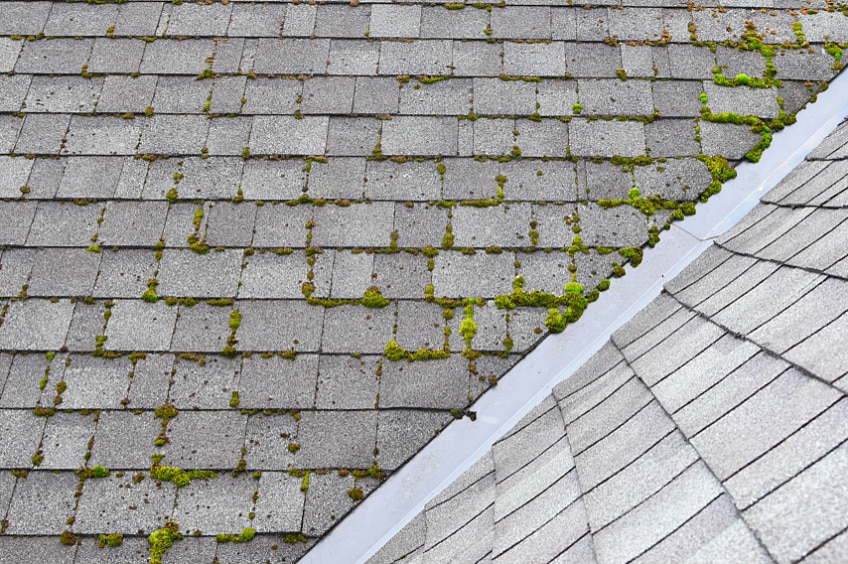
Moss grows upward and outward, lifting shingles as it expands. This breaks the watertight seal designed to protect your home.
Over time:
- Water seeps under shingles
- Underlayment becomes saturated
- Roof decking begins to rot
- Leaks appear inside the home
Once interior water damage occurs, repair costs can increase three to five times compared to early moss removal.


4
How to Remove Moss From Your Roof Safely (Step-by-Step)
Important: Avoid pressure washing—it can destroy shingles.
Method 1: Manual Removal (Light Moss)
Best for: Small patches
Steps:
- Use a soft-bristle brush
- Gently scrape downward only
- Do not scrub upward (this lifts shingles)
- Work on a dry, cool day (22–28°C / 72–82°F)
Method 2: DIY Moss Cleaning Solution
Recommended mixture:
- 2 liters of water
- 250 ml white vinegar or oxygen bleach
Steps:
- Mix solution in a garden sprayer
- Lightly saturate moss areas
- Let sit for 20–30 minutes
- Rinse gently with low-pressure water
Method 3: Professional Roof Cleaning
Best for: Heavy or widespread moss
Professionals use:
- Specialized soft-wash systems
- Eco-safe chemicals
- Safety equipment
Though more expensive, this method minimizes damage and ensures thorough removal.
How to Prevent Moss From Growing Back
1. Trim Overhanging Trees
Cut branches back at least 6–10 feet from the roof to improve sunlight and airflow.
2. Install Zinc or Copper Strips
When rainwater flows over these metals, it releases ions that inhibit moss growth.
- Zinc strips last 5–7 years
- Copper strips can last 20+ years
3. Clean Gutters Regularly
Clear gutters twice a year to prevent water overflow and debris buildup.
4. Schedule Annual Roof Inspections
Early detection prevents expensive repairs. Many roofing contractors offer low-cost or free inspections.
When Should You Worry About Roof Moss?
You should take action immediately if:
- Moss covers more than 10–15% of your roof
- Shingles appear curled or lifted
- You notice leaks or ceiling stains
- Your roof is over 15 years old
Ignoring these signs increases the risk of structural damage.
FAQ: Roof Moss Explained
Why Is Moss Growing On The Roof Of My House Even If It’s New?
Even new roofs can grow moss if installed in shaded, damp environments or near heavy tree coverage.
Can Roof Moss Cause Leaks?
Yes. Moss lifts shingles and traps moisture, allowing water to penetrate the roofing system.
Is Moss More Common on Certain Roof Slopes?
Yes. North-facing slopes receive less sunlight and stay moist longer, making them prime moss zones.
Does Moss Mean I Need a New Roof?
Not always. If caught early, moss can be removed without replacement. Severe damage may require partial repairs.
Can Moss Affect Home Value?
Yes. Visible roof moss can lower curb appeal and raise red flags during home inspections.
Conclusion
So, why is moss growing on the roof of your house? In most cases, it’s a combination of moisture, shade, aging materials, and debris buildup. While moss may seem minor, it can quietly damage your roof and lead to costly repairs if ignored.
The good news? With proper cleaning, prevention strategies, and routine maintenance, you can stop moss growth and extend your roof’s lifespan for years to come.
If you found this guide helpful, share it with fellow homeowners on social media—you might help someone avoid an expensive roofing surprise.

Leave a Reply