If you’re building or living in an insulated concrete form (ICF) home with a structural insulated panel (SIP) roof, you likely chose it for superior performance. But how do you actually Measure Energy Efficiency In ICF House With SIP Roof systems?
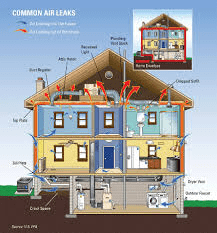
Understanding real performance—beyond marketing claims—helps you verify savings, improve comfort, and maximize return on investment. In this guide, we’ll walk step-by-step through proven methods to measure, test, and interpret energy efficiency in high-performance homes.
Read too: Is It Reasonable to Ask the Seller to Replace the Roof?
How To Measure Energy Efficiency In ICF House With SIP Roof
To properly Measure Energy Efficiency In ICF House With SIP Roof, you need both theoretical metrics (like R-value) and real-world performance testing (like blower door results).
ICF walls and SIP roofs are considered advanced building envelope systems. According to Wikipedia – Structural Insulated Panel, SIPs combine rigid insulation with structural boards to reduce thermal bridging and improve airtightness.
ICF walls use insulated concrete forms filled with reinforced concrete, delivering high thermal mass and insulation.
But performance depends on execution.
What Makes ICF + SIP Homes Energy Efficient?
Before measuring, understand what drives performance.
Key Efficiency Factors
- Continuous insulation
- Reduced air leakage
- Thermal mass (ICF)
- Minimal thermal bridging
- Tight roof-to-wall connections
Compared to standard wood-framed homes, ICF + SIP combinations can reduce energy use by 20–50%, depending on climate and installation quality.
What Is the Best Way to Measure Energy Efficiency?
The most accurate methods include:
- Blower Door Test
- HERS Index Rating
- Utility Bill Analysis
- Infrared Thermal Imaging
- Manual J Load Calculation
Let’s break these down.
1. Blower Door Test: Measuring Airtightness
What It Does
A blower door test measures air leakage.
Air infiltration is one of the biggest causes of energy loss.
Step-by-Step Overview
- Install blower fan in exterior doorway.
- Seal all exterior openings.
- Depressurize home to 50 Pascals.
- Measure airflow in CFM (cubic feet per minute).
Result is reported as ACH50 (Air Changes Per Hour at 50 Pascals).
Ideal Performance Levels
| Home Type | Typical ACH50 |
|---|---|
| Standard home | 5–7 ACH50 |
| Energy-efficient home | 3 ACH50 |
| ICF + SIP home | 0.6–2 ACH50 |
Lower numbers mean better efficiency.
Many high-performance ICF homes test below 1.5 ACH50.
2. HERS Index Rating (Home Energy Rating System)
The HERS Index compares your home to a standard reference home.
Scale:
- 100 = Standard new home
- 0 = Net-zero energy home
Well-built ICF + SIP homes often score between 40–60 HERS.
Why It Matters
- Required for many energy rebates
- Helps resale value
- Provides third-party verification
Professional raters perform this test.
3. Utility Bill Analysis (Real-World Measurement)
Sometimes the simplest method is comparing utility bills.
How To Measure
- Gather 12 months of energy bills.
- Calculate average kWh per month.
- Divide by square footage.
Example:
- 12,000 kWh per year
- 2,400 sq ft home
= 5 kWh per sq ft annually
Compare to national average of 10–12 kWh per sq ft.
This gives a practical efficiency snapshot.
4. Infrared Thermal Imaging
Infrared cameras reveal:
- Air leaks
- Insulation gaps
- Thermal bridging
- Roof connection issues
Best Conditions for Testing
- Indoor/outdoor temperature difference of at least 15°F
- Early morning or evening
- HVAC running
Thermal imaging is especially useful at SIP-to-ICF joints.
5. Manual J Load Calculation
Manual J calculations determine:
- Heating load (BTUs required)
- Cooling load
- HVAC sizing accuracy
ICF + SIP homes often require 30–40% smaller HVAC systems than wood-frame homes.
Oversized HVAC reduces efficiency.
R-Value vs Real Performance
R-value measures insulation resistance.
Typical values:
- ICF walls: R-20 to R-25 (effective R-value higher due to thermal mass)
- SIP roof panels: R-30 to R-50
However, effective performance depends on:
- Air sealing
- Installation quality
- Climate zone
A tight R-25 wall may outperform a leaky R-30 wall.
Advantages vs Disadvantages of ICF + SIP Efficiency
Advantages
✔ Superior airtightness
✔ High thermal mass
✔ Reduced thermal bridging
✔ Lower HVAC loads
✔ Enhanced indoor comfort
Disadvantages
✘ Higher upfront cost
✘ Requires skilled installation
✘ Difficult retrofitting
How Climate Affects Performance
Energy efficiency varies by climate zone.
| Climate | ICF Benefit | SIP Benefit |
|---|---|---|
| Cold | Thermal mass retains heat | High insulation |
| Hot | Reduces temperature swings | Reflects solar gain |
| Mixed | Balanced performance | Strong envelope |
In extreme climates, performance differences are more noticeable.
How To Improve Energy Efficiency Further
Even efficient homes can improve.
Step 1: Seal Penetrations
- Around plumbing
- Electrical boxes
- HVAC ducts
Step 2: Upgrade Windows
Low-E, double or triple-pane windows reduce heat transfer.
Step 3: Add ERV/HRV System
Since airtight homes limit fresh air, energy recovery ventilation maintains air quality without losing efficiency.
Step 4: Install Smart Thermostats
Optimize heating and cooling cycles.
Case Example: 2,500 Sq Ft ICF + SIP Home
- ACH50: 1.2
- HERS score: 48
- Annual electricity: 9,800 kWh
- HVAC size: 3-ton system
Comparable wood-frame home used 15,000+ kWh annually.
Savings: approximately 30–40%.
FAQ: Measure Energy Efficiency In ICF House With SIP Roof
1. What is the most accurate way to measure efficiency?
A blower door test combined with a HERS rating provides the most reliable assessment.
2. What ACH number is good for ICF homes?
Anything under 2 ACH50 is excellent. Under 1.5 is outstanding.
3. Are ICF homes really more efficient?
Yes, when properly installed. Airtightness and thermal mass improve performance.
4. Does a SIP roof improve efficiency?
Yes. SIP roofs reduce thermal bridging and increase insulation continuity.
5. How do I know if my HVAC is properly sized?
Request a Manual J calculation from a licensed HVAC contractor.
6. Can utility bills alone measure efficiency?
They provide real-world data but don’t isolate air leakage or insulation issues.
Conclusion
To properly Measure Energy Efficiency In ICF House With SIP Roof, combine airtightness testing, energy ratings, thermal imaging, and real-world utility analysis.
ICF walls and SIP roofs offer powerful energy-saving potential—but performance depends on execution. By using blower door tests, HERS scoring, and load calculations, you can verify efficiency and optimize your home for maximum comfort and savings.
If this guide helped you understand how to measure performance accurately, share it on social media to help other homeowners build smarter and more energy-efficient homes.



Leave a Reply